In our absence, please see the recent eBird reports for area sightings.
NOTE: These may or may not have been reviewed by regional editors! Take these reports with a grain of salt, as typos and misidentification can occur.
Brewster County (eBird link here)

Blogging from Marathon, TX about birding, butterflies, moths and more. Exploring the gems of Brewster County, Post Park, Big Bend National Park and the surrounding region. Bird watching: Big Bend and beyond!
Showing posts with label birds. Show all posts
Showing posts with label birds. Show all posts
Tuesday, December 1, 2015


Tuesday, November 24, 2015
Christmas Bird Count Season in West Texas
Beautiful scenery and interesting species diversity should make a CBC detour through West Texas worthwhile, more dates will be added as we hear about them:
19 December - Davis Mountains CBC
20 December - Balmorhea CBC
For more information, contact Mark Lockwood mark.lockwood@tpwd.texas.gov
Friday, November 13, 2015
B.J. Bishop Wetlands / Presidio County
Fantastic news for birds and birders, the eagerly anticipated wetland is finally birdable! *post is backdated
EDIT: via Carolyn Ohl -
"I was there about a month ago and they wouldn't let you drive the road down to the wetlands. Apparently you have to use a scope from the highway. There is a dirt dike that you can get a little closer on."
***
Subject: [texbirds] new birding location at Presidio
Date: Thu, 12 Nov 2015 18:10:51 +0000
Dear TexBirders,
There is a new man-made wetland in Presidio County that is open to the public. The B.J. Bishop Wetlands at Loma Paloma is located 0.5 miles east of Fort Leaton State Historic Site on the south side of Ranch Road 170. The new sewage treatment facility for Presidio is located on the opposite side of the road and the wetland is fed by treated water that is released from that plant. Parking is located on the northeast corner of the wetlands and access is on a maintained gravel road 0.3 miles farther east across from the Loma Paloma RV Park. Please park in the designated area and walk around the wetland on the road that encircles the site. I was there on 11 November and although I did not see anything unusual I did have 27 species of birds during my short visit. Highlights included Snow Goose, Wood Duck, Ferruginous Hawk, Golden-fronted Woodpecker, and singing (western) Marsh Wrens. I have placed a photo of the wetlands taken from RR170 on my Flickr site at:
https://www.flickr.com/photos/70194759@N05/
If you are working on a Century Club list for Presidio County, this is certainly a place that can't be missed. To my knowledge it is the only publically accessible wetland in the county.
Mark
Mark Lockwood
402 E. Harriet Ave.
Alpine, Texas 79830
mark.lockwood@tpwd.texas.gov
***
More information:
I was at the BJ Bishop wetland in mid-August and again on October 30. The RV Park Manager, Donna Arce, is very friendly, and very interested in the birds that are visiting the wetland. You might be able to sweet talk her into accompanying you down closer to the wetland on the gravel road that Mark Lockwood mentions, but my experience is the same as Carolyn's concerning trespassing.
Eventually the owners of the wetland plan to build a bird blind up by the Ranch Road, but it sure would be nice to have it be closer to the wetland.
Maybe a more local birder could persuade them?
Nice birds on October 30 were 2 White-faced Ibis, a Long-billed Dowitcher and ducks.
Jane Tillman
Austin
P.S Fort Leaton picnic area was quite birdy too with Green-tailed Towhee
and Brewer's Sparrow very cooperative.
EDIT: via Carolyn Ohl -
"I was there about a month ago and they wouldn't let you drive the road down to the wetlands. Apparently you have to use a scope from the highway. There is a dirt dike that you can get a little closer on."
***
Subject: [texbirds] new birding location at Presidio
Date: Thu, 12 Nov 2015 18:10:51 +0000
Dear TexBirders,
There is a new man-made wetland in Presidio County that is open to the public. The B.J. Bishop Wetlands at Loma Paloma is located 0.5 miles east of Fort Leaton State Historic Site on the south side of Ranch Road 170. The new sewage treatment facility for Presidio is located on the opposite side of the road and the wetland is fed by treated water that is released from that plant. Parking is located on the northeast corner of the wetlands and access is on a maintained gravel road 0.3 miles farther east across from the Loma Paloma RV Park. Please park in the designated area and walk around the wetland on the road that encircles the site. I was there on 11 November and although I did not see anything unusual I did have 27 species of birds during my short visit. Highlights included Snow Goose, Wood Duck, Ferruginous Hawk, Golden-fronted Woodpecker, and singing (western) Marsh Wrens. I have placed a photo of the wetlands taken from RR170 on my Flickr site at:
https://www.flickr.com/photos/70194759@N05/
If you are working on a Century Club list for Presidio County, this is certainly a place that can't be missed. To my knowledge it is the only publically accessible wetland in the county.
Mark
Mark Lockwood
402 E. Harriet Ave.
Alpine, Texas 79830
mark.lockwood@tpwd.texas.gov
***
More information:
I was at the BJ Bishop wetland in mid-August and again on October 30. The RV Park Manager, Donna Arce, is very friendly, and very interested in the birds that are visiting the wetland. You might be able to sweet talk her into accompanying you down closer to the wetland on the gravel road that Mark Lockwood mentions, but my experience is the same as Carolyn's concerning trespassing.
Eventually the owners of the wetland plan to build a bird blind up by the Ranch Road, but it sure would be nice to have it be closer to the wetland.
Maybe a more local birder could persuade them?
Nice birds on October 30 were 2 White-faced Ibis, a Long-billed Dowitcher and ducks.
Jane Tillman
Austin
P.S Fort Leaton picnic area was quite birdy too with Green-tailed Towhee
and Brewer's Sparrow very cooperative.
Sunday, August 30, 2015
Guest post: BBNP and Marathon
Ultimately, I need to check my pre-sorted emails more frequently: this information is nearly a month old (posting date is 23 Sept, but this will be backdated for the archives). These are from Sue Heath's posts from 28 and 29 Aug, 2015.
***
White-eared hummingbird, Brewster county
All,
Found a white-eared hummingbird along the boot spring trail in Brewster county this morning. It was past the buildings but before the juniper canyon trail goes left. It was defending a large patch of flowers against a black-chinned hummer and a blue-throated hummingbird. Appeared to be a female or young bird as it had no gorget feathers. I posted a full description on ebird. Got some very blurry photos but can't post them til I get better internet. Good birds up there today. Many townsends and Wilson's warblers, one Colima warbler, four or five painted redstarts.
Tad thinks he had a buff-breasted flycatcher in the same general area as the white-eared hummer but we could not relocate it so I didn't see the bird.
Sue
Susan Heath
Gulf Coast Bird Observatory
Lake Jackson, TX
Sent from my iPhone
***
Burrowing owls & long-billed curlews, marathon prairie dog
We found three live and one road kill burrowing owls at the marathon prairie dog town along U.S. 385 in Brewster county today. The live ones were near the northern end. There were also eight long-billed curlew which ebird flagged as rare. Also a dead badger that some vultures were investigating. It looked like it got hit by a car and was just able to drag itself about 30 ft out Into the field before expiring. I wish I would see a live one sometime. The dead owl was unfortunately too far gone for a specimen.
Sue
Susan Heath
Gulf Coast Bird Observatory
Lake Jackson, TX
Sent from my iPhone
***
The only corrections are to obvious phone-typos, many thanks to Sue for the permission to share!!
***
White-eared hummingbird, Brewster county
All,
Found a white-eared hummingbird along the boot spring trail in Brewster county this morning. It was past the buildings but before the juniper canyon trail goes left. It was defending a large patch of flowers against a black-chinned hummer and a blue-throated hummingbird. Appeared to be a female or young bird as it had no gorget feathers. I posted a full description on ebird. Got some very blurry photos but can't post them til I get better internet. Good birds up there today. Many townsends and Wilson's warblers, one Colima warbler, four or five painted redstarts.
Tad thinks he had a buff-breasted flycatcher in the same general area as the white-eared hummer but we could not relocate it so I didn't see the bird.
Sue
Susan Heath
Gulf Coast Bird Observatory
Lake Jackson, TX
Sent from my iPhone
***
Burrowing owls & long-billed curlews, marathon prairie dog
We found three live and one road kill burrowing owls at the marathon prairie dog town along U.S. 385 in Brewster county today. The live ones were near the northern end. There were also eight long-billed curlew which ebird flagged as rare. Also a dead badger that some vultures were investigating. It looked like it got hit by a car and was just able to drag itself about 30 ft out Into the field before expiring. I wish I would see a live one sometime. The dead owl was unfortunately too far gone for a specimen.
Sue
Susan Heath
Gulf Coast Bird Observatory
Lake Jackson, TX
Sent from my iPhone
***
The only corrections are to obvious phone-typos, many thanks to Sue for the permission to share!!
Tuesday, August 4, 2015
Guest sightings: Lake Balmorhea
Mary Beth Stowe has allowed us to post her summary from Lake Balmorhea - it's snagged from Texbirds, backdated, and slightly reformatted for the blog but we're grateful for what we can get! I keep saying "we" - the blog is its own entity, I suppose? At any rate, be sure to check out Mary Beth's site: www.miriameaglemon.com, it's a fantastic combination of birding and art and humor and maaaaybe one of these days I'll even get to meet the brains in person!
***
Lake Balmorhea
Date: Mon, 3 Aug 2015
Hi, all!
Was on my way to southeast Arizona today, but made a quick stop at Lake Balmorhea first thing. Stopped under the overpass long enough to confirm Cave Swallow and record the Rock Pigeons making a bunch of noise. Got to the lake, stuck my five bucks in the door, and delighted to the calls of both Western and Clark's Grebes and their chicks! And I relished in something else I hadn't experienced since leaving San Diego: the smell of the wet desert! Crawling around to the back side of the lake, a goofy-looking Pyrrhuloxia popped up on a bush, and along the back side of the lake was a nice assortment of water birds: what I'm presuming to be Blue-winged Teal (they were all in eclipse plumage and were quite distant - and of course flew the minute I got the scope out L), a dowitcher, a Greater Yellowlegs, a Great Blue Heron, and even a Black Tern batting by in the distance! Coming around the corner a pair of Scaled Quail were down by the water, and on the west side of the road was another little wetland with several Black-necked Stilts and a couple of Ruddy Ducks. Down at the end of the road a Yellowthroat was singing, and a brilliant Blue Grosbeak sat right up on a mesquite! While enjoying this a night heron, White-faced Ibis, and Green Heron all sounded off somewhere. On the way out a Black-throated Sparrow sang in the distance, and Western Kingbirds were patrolling. I think I mentioned the last time I came out here how much this place reminds me of the fresh-water wetlands near the Salton Sea!
Mary Beth Stowe
McAllen, TX
www.miriameaglemon.com
***
Lake Balmorhea
Date: Mon, 3 Aug 2015
Hi, all!
Was on my way to southeast Arizona today, but made a quick stop at Lake Balmorhea first thing. Stopped under the overpass long enough to confirm Cave Swallow and record the Rock Pigeons making a bunch of noise. Got to the lake, stuck my five bucks in the door, and delighted to the calls of both Western and Clark's Grebes and their chicks! And I relished in something else I hadn't experienced since leaving San Diego: the smell of the wet desert! Crawling around to the back side of the lake, a goofy-looking Pyrrhuloxia popped up on a bush, and along the back side of the lake was a nice assortment of water birds: what I'm presuming to be Blue-winged Teal (they were all in eclipse plumage and were quite distant - and of course flew the minute I got the scope out L), a dowitcher, a Greater Yellowlegs, a Great Blue Heron, and even a Black Tern batting by in the distance! Coming around the corner a pair of Scaled Quail were down by the water, and on the west side of the road was another little wetland with several Black-necked Stilts and a couple of Ruddy Ducks. Down at the end of the road a Yellowthroat was singing, and a brilliant Blue Grosbeak sat right up on a mesquite! While enjoying this a night heron, White-faced Ibis, and Green Heron all sounded off somewhere. On the way out a Black-throated Sparrow sang in the distance, and Western Kingbirds were patrolling. I think I mentioned the last time I came out here how much this place reminds me of the fresh-water wetlands near the Salton Sea!
Mary Beth Stowe
McAllen, TX
www.miriameaglemon.com
Wednesday, July 29, 2015
Guest sightings: GMNP and Davis Mountains
This post has been slightly reformatted for the blog, but is being re-posted from Texbirds with Christian's permission (thank you!)
***
GMNP and Davis Mountains last week - possible Gray Hawk
Date: Tue, 28 Jul 2015
Hey there,
Sorry for the belated post. Had a great birding/hiking/camping trip last week out in West Texas with friends Matt Melendez and Michael Falconer mainly at Guadalupe Mountains National Park and Davis Mountains. Lots of rain. Hail and rain cut our time a little short in the back country, but we re-located to Davis Mountains and had a good time.
Monday 7/20/15 Short afternoon stop at McDonald Observatory, over to Van Horn, and up to GMNP.
Highlights included Hepatic Tanager pair at McDonald Observatory, and a big flock of Yellow-headed Blackbirds at Van Horn Cemetery. And steaks to go from Van Horn Steak House. Also eBird was upset at two Scissor-tailed Flycatchers at the cemetery. Pine Springs at GMNP has an active pair of Summer Tanagers, also great views of Blue Grosbeaks and Scott’s Orioles in the evening sunset. After dark had great looks at Common Poorwills near Frijole Ranch, as well as two huge magnificent meteors, one red and one blazing green, right after another. Matt the astronomer was pumped, as were we. Shockingly exhilarating.
Tuesday 7/21/15 up to Tejas Campground
At around 6:40 drove over to the rest area east of the park and saw the breeding Hooded Orioles, including at least one youngster. Started hike up to high country at around 9:00 AM, but it was not to warm on the hike; packs made it pretty hot and sweaty though. Highlights of the hike in included loads of singing Black-chinned Sparrows, a soaring Peregrine Falcon (bird of the trip for Falconer) and getting acquainted with the high country birds like Cordilleran Flycatcher and Pygmy Nuthatches.
Wednesday 7/22/15 Tejas Campground to Bowl and down
Woke up real early to hear the Mexican Whip-poor-wills. No owls. Hiked up to the bowl, hearing and seeing more of the high country birds including Warbling Vireo, Golden Eagle, a single Virginia’s Warbler, a pair of Pine Siskins, a Zone-tailed Hawk, but no Grace’s Warbler. Also found a tree that had exploded from lightning.
Thursday 7/23/15 Davis Mountains
Spend half the day at the Davis Mountains. No Montezuma Quail, but had Zone-tailed Hawks at the State Park and at Madera Canyon Trail. Here we also had 2 Gray Flycatchers. Had the Common Black-Hawk family along Limpia Creek. On the way out we also briefly saw a small buteo that was probably a Gray Hawk, (before reaching Wild Rose Pass) but only had a split second view as it flew by into the cottonwoods. Stopped and turned around but were never able to relocate it. Clearly a small buteo, with a boldly banded tail. Shape unlike Zone-tailed, and appeared more pale. Oh well maybe someone else will find it.
Also had a Zone-tailed Hawk just east of Ozona in Crockett County.
Good birding,
Christian Walker
Begin forwarded message:
> From: ebird-checklist@cornell.edu
> Subject: eBird Report - Guadalupe Mts. NP--The Bowl, Jul 22, 2015
> Date: July 28, 2015 at 7:41:48 PM CDT
> To: christian.walker@earthlink.net
>
> Guadalupe Mts. NP--The Bowl, Culberson, Texas, US
> Jul 22, 2015 5:00 AM - 4:00 PM
> Protocol: Traveling
> 9.6 mile(s)
> Comments: Birding with Michael Falconer and Matthew Melendez. Walked from Tejas Campground up the Juniper Trail, spent a lot of time in the bowl, walked the entire Bowl Trail, and then back out to the top of Bear Canyon. Clear, with some clouds, calm, 50 degrees in the morning, slowly warming up to 80 degrees about. Couldn't find a Grace's Warbler for the life of us. Damn. One of the best spots was by the creek in the Bowl which had water and constantly had birds coming in to a little pool by the spot in the trail where it pulls a u from going north-east to west.
> 40 species
>
> Turkey Vulture 4
> Golden Eagle 1 AD soaring in from the north over McKittrick Ridge (?) near lightning struck pine on Juniper Trail almost to Bowl. Wowie.
> Cooper's Hawk 2
> Zone-tailed Hawk 1 Nice adult soaring over the bowl
> Red-tailed Hawk 2
> Mexican Whip-poor-will 2 HO in Tejas Campground. Would only sing song once before shutting up for fifteen minutes or so.
> White-throated Swift 8
> Broad-tailed Hummingbird 5
> Rufous Hummingbird 1 Brilliant male briefly seen feeding at red flowers
> Acorn Woodpecker 2 At the creek in the Bowl
> Hairy Woodpecker (Rocky Mts.) 1 HO in Tejas Campground
> Northern Flicker (Red-shafted) 6
> Western Wood-Pewee 12 Loads in the open areas in the bowl
> Cordilleran Flycatcher 17 Mainly HO
> Ash-throated Flycatcher 1 Heard up in the Bowl
> Plumbeous Vireo 4
> Warbling Vireo 1 HO on Juniper Trail
> Steller's Jay 4 HO
> Violet-green Swallow 12 Flying high above the bowl. Definitely not WTSW
> Mountain Chickadee 46
> Bushtit (Interior) 20
> White-breasted Nuthatch 7
> Pygmy Nuthatch 17
> Brown Creeper 1
> Rock Wren 4 Family at Hunter Peak
> Canyon Wren 1 HO from Hunter Peak on outer face of range
> House Wren 8
> Western Bluebird 3
> Hermit Thrush 14
> Virginia's Warbler 1 M in the very top of a pine in the bowl. Flew in from a while a way, stayed for two minutes and then flew on. Out of habitat and acting like it.
> Yellow-rumped Warbler (Audubon's) 3 At the creek in the Bowl
> Spotted Towhee 9
> Rufous-crowned Sparrow 2
> Chipping Sparrow 2
> Black-chinned Sparrow 1 1 imm at the very top of Hunter Peak at about 8,300 ft. Crazy?
> Dark-eyed Junco (Red-backed) 9
> Hepatic Tanager 1
> Western Tanager 4
> Pine Siskin 2 A pair at the creek in the Bowl
> Lesser Goldfinch 3 In the Bowl
>
> View this checklist online at http://ebird.org/ebird/view/checklist?subID=S24414520
>
> This report was generated automatically by eBird v3 (http://ebird.org)
***
Oh and also heard a Bell’s Vireo singing along Hwy 54 south to Van Horn on 7/22/15.
***
Many thanks to Christian Walker of Austin, TX for graciously allowing us to re-post his trip notes!
***
GMNP and Davis Mountains last week - possible Gray Hawk
Date: Tue, 28 Jul 2015
Hey there,
Sorry for the belated post. Had a great birding/hiking/camping trip last week out in West Texas with friends Matt Melendez and Michael Falconer mainly at Guadalupe Mountains National Park and Davis Mountains. Lots of rain. Hail and rain cut our time a little short in the back country, but we re-located to Davis Mountains and had a good time.
Monday 7/20/15 Short afternoon stop at McDonald Observatory, over to Van Horn, and up to GMNP.
Highlights included Hepatic Tanager pair at McDonald Observatory, and a big flock of Yellow-headed Blackbirds at Van Horn Cemetery. And steaks to go from Van Horn Steak House. Also eBird was upset at two Scissor-tailed Flycatchers at the cemetery. Pine Springs at GMNP has an active pair of Summer Tanagers, also great views of Blue Grosbeaks and Scott’s Orioles in the evening sunset. After dark had great looks at Common Poorwills near Frijole Ranch, as well as two huge magnificent meteors, one red and one blazing green, right after another. Matt the astronomer was pumped, as were we. Shockingly exhilarating.
Tuesday 7/21/15 up to Tejas Campground
At around 6:40 drove over to the rest area east of the park and saw the breeding Hooded Orioles, including at least one youngster. Started hike up to high country at around 9:00 AM, but it was not to warm on the hike; packs made it pretty hot and sweaty though. Highlights of the hike in included loads of singing Black-chinned Sparrows, a soaring Peregrine Falcon (bird of the trip for Falconer) and getting acquainted with the high country birds like Cordilleran Flycatcher and Pygmy Nuthatches.
Wednesday 7/22/15 Tejas Campground to Bowl and down
Woke up real early to hear the Mexican Whip-poor-wills. No owls. Hiked up to the bowl, hearing and seeing more of the high country birds including Warbling Vireo, Golden Eagle, a single Virginia’s Warbler, a pair of Pine Siskins, a Zone-tailed Hawk, but no Grace’s Warbler. Also found a tree that had exploded from lightning.
Thursday 7/23/15 Davis Mountains
Spend half the day at the Davis Mountains. No Montezuma Quail, but had Zone-tailed Hawks at the State Park and at Madera Canyon Trail. Here we also had 2 Gray Flycatchers. Had the Common Black-Hawk family along Limpia Creek. On the way out we also briefly saw a small buteo that was probably a Gray Hawk, (before reaching Wild Rose Pass) but only had a split second view as it flew by into the cottonwoods. Stopped and turned around but were never able to relocate it. Clearly a small buteo, with a boldly banded tail. Shape unlike Zone-tailed, and appeared more pale. Oh well maybe someone else will find it.
Also had a Zone-tailed Hawk just east of Ozona in Crockett County.
Good birding,
Christian Walker
Begin forwarded message:
> From: ebird-checklist@cornell.edu
> Subject: eBird Report - Guadalupe Mts. NP--The Bowl, Jul 22, 2015
> Date: July 28, 2015 at 7:41:48 PM CDT
> To: christian.walker@earthlink.net
>
> Guadalupe Mts. NP--The Bowl, Culberson, Texas, US
> Jul 22, 2015 5:00 AM - 4:00 PM
> Protocol: Traveling
> 9.6 mile(s)
> Comments: Birding with Michael Falconer and Matthew Melendez. Walked from Tejas Campground up the Juniper Trail, spent a lot of time in the bowl, walked the entire Bowl Trail, and then back out to the top of Bear Canyon. Clear, with some clouds, calm, 50 degrees in the morning, slowly warming up to 80 degrees about. Couldn't find a Grace's Warbler for the life of us. Damn. One of the best spots was by the creek in the Bowl which had water and constantly had birds coming in to a little pool by the spot in the trail where it pulls a u from going north-east to west.
> 40 species
>
> Turkey Vulture 4
> Golden Eagle 1 AD soaring in from the north over McKittrick Ridge (?) near lightning struck pine on Juniper Trail almost to Bowl. Wowie.
> Cooper's Hawk 2
> Zone-tailed Hawk 1 Nice adult soaring over the bowl
> Red-tailed Hawk 2
> Mexican Whip-poor-will 2 HO in Tejas Campground. Would only sing song once before shutting up for fifteen minutes or so.
> White-throated Swift 8
> Broad-tailed Hummingbird 5
> Rufous Hummingbird 1 Brilliant male briefly seen feeding at red flowers
> Acorn Woodpecker 2 At the creek in the Bowl
> Hairy Woodpecker (Rocky Mts.) 1 HO in Tejas Campground
> Northern Flicker (Red-shafted) 6
> Western Wood-Pewee 12 Loads in the open areas in the bowl
> Cordilleran Flycatcher 17 Mainly HO
> Ash-throated Flycatcher 1 Heard up in the Bowl
> Plumbeous Vireo 4
> Warbling Vireo 1 HO on Juniper Trail
> Steller's Jay 4 HO
> Violet-green Swallow 12 Flying high above the bowl. Definitely not WTSW
> Mountain Chickadee 46
> Bushtit (Interior) 20
> White-breasted Nuthatch 7
> Pygmy Nuthatch 17
> Brown Creeper 1
> Rock Wren 4 Family at Hunter Peak
> Canyon Wren 1 HO from Hunter Peak on outer face of range
> House Wren 8
> Western Bluebird 3
> Hermit Thrush 14
> Virginia's Warbler 1 M in the very top of a pine in the bowl. Flew in from a while a way, stayed for two minutes and then flew on. Out of habitat and acting like it.
> Yellow-rumped Warbler (Audubon's) 3 At the creek in the Bowl
> Spotted Towhee 9
> Rufous-crowned Sparrow 2
> Chipping Sparrow 2
> Black-chinned Sparrow 1 1 imm at the very top of Hunter Peak at about 8,300 ft. Crazy?
> Dark-eyed Junco (Red-backed) 9
> Hepatic Tanager 1
> Western Tanager 4
> Pine Siskin 2 A pair at the creek in the Bowl
> Lesser Goldfinch 3 In the Bowl
>
> View this checklist online at http://ebird.org/ebird/view/checklist?subID=S24414520
>
> This report was generated automatically by eBird v3 (http://ebird.org)
***
Oh and also heard a Bell’s Vireo singing along Hwy 54 south to Van Horn on 7/22/15.
***
Many thanks to Christian Walker of Austin, TX for graciously allowing us to re-post his trip notes!
Thursday, July 23, 2015
Guest Sightings: White-eared Hummingbird at Boot Canyon
Better late than never, perhaps - this post has been backdated. Reposted from Texbirds with permission. Slightly edited to fit blog format.
***
White-eared Hummingbird, Monday, 7/20/15, at Boot Canyon
Date: Wed, 22 Jul 2015
On Monday I saw a White-eared Hummingbird at Boot Canyon that appears to be the same bird reported by Randy Pinkston.
It took the better part of 3.5 hours for me to get a solid view. When I finally saw the bird, it was perched mid-level in a tree near the picnic table above the spring. That was at ~3.30pm. Menacing skies and the threat of hail sent me on my way shortly thereafter.
Thanks to Randy and Byron for getting the word out,
Teresa C. Keck
***
Many thanks to Teresa Keck of South Texas for her permission to share her post! White-eared Hummingbirds *not* at feeders are quite an exceptional event!
***
White-eared Hummingbird, Monday, 7/20/15, at Boot Canyon
Date: Wed, 22 Jul 2015
On Monday I saw a White-eared Hummingbird at Boot Canyon that appears to be the same bird reported by Randy Pinkston.
It took the better part of 3.5 hours for me to get a solid view. When I finally saw the bird, it was perched mid-level in a tree near the picnic table above the spring. That was at ~3.30pm. Menacing skies and the threat of hail sent me on my way shortly thereafter.
Thanks to Randy and Byron for getting the word out,
Teresa C. Keck
***
Many thanks to Teresa Keck of South Texas for her permission to share her post! White-eared Hummingbirds *not* at feeders are quite an exceptional event!
Thursday, June 18, 2015
Presidio Wetlands?
I just heard rumor of the Presidio Wetlands via Carolyn Ohl - http://cmoasis.blogspot.com/2015/06/whirlwind-day.html
This is fantastic news for birds and birders and looks like a promising endeavor! If only the Marathon ponds could turn into something like this...
http://bigbendnow.com/2015/05/presidio-wetlands-open-for-visitors/
In case the archived version doesn't work, here's the text:
Presidio Wetlands open for visitors
The B.J. Bishop Wetlands is now another roadside attraction in Presidio, Texas. Bird Watchers now have a great place to see the birds of the Big Bend. This project was made possible by a matching grant from The North American Wetlands Conservation Act that conserves North America’s waterfowl, fish and wildlife resources while producing a variety of environmental and economic benefits. Its success is driven by partnerships involving federal, state and local governments; nonprofit organizations and community groups. Every federal dollar provided by NAWCA must be matched by at least one dollar from non-federal sources. The partners in B.J. project are The Trans- Pecos Conservation Land Trust, The Lajunta Heritage Center, and the City of Presidio. In kind donations of Land and labor served as the match with a local parties working together. The Texas Conservation Corps was on site this past week transplanting aquatic plants from the Presidio Waste Water Treatment Plant that uses them in the process to filter the nutrients out and treat the effluent to TCEQ reuse standards. The recycled water can be sent to the wetland or into the Rio Grande as needed. The water is not for human consumption but perfect to support a new habitat for our local birds, butterflies and wildlife. Viewing overlook is on the levy just off FM 170 East at half mile past Fort Leaton.
For more information call Presidio Tourism 432 229 3517 X 106 or email bnewton@presidiotx.us
This is fantastic news for birds and birders and looks like a promising endeavor! If only the Marathon ponds could turn into something like this...
http://bigbendnow.com/2015/05/presidio-wetlands-open-for-visitors/
In case the archived version doesn't work, here's the text:
Presidio Wetlands open for visitors
The B.J. Bishop Wetlands is now another roadside attraction in Presidio, Texas. Bird Watchers now have a great place to see the birds of the Big Bend. This project was made possible by a matching grant from The North American Wetlands Conservation Act that conserves North America’s waterfowl, fish and wildlife resources while producing a variety of environmental and economic benefits. Its success is driven by partnerships involving federal, state and local governments; nonprofit organizations and community groups. Every federal dollar provided by NAWCA must be matched by at least one dollar from non-federal sources. The partners in B.J. project are The Trans- Pecos Conservation Land Trust, The Lajunta Heritage Center, and the City of Presidio. In kind donations of Land and labor served as the match with a local parties working together. The Texas Conservation Corps was on site this past week transplanting aquatic plants from the Presidio Waste Water Treatment Plant that uses them in the process to filter the nutrients out and treat the effluent to TCEQ reuse standards. The recycled water can be sent to the wetland or into the Rio Grande as needed. The water is not for human consumption but perfect to support a new habitat for our local birds, butterflies and wildlife. Viewing overlook is on the levy just off FM 170 East at half mile past Fort Leaton.
For more information call Presidio Tourism 432 229 3517 X 106 or email bnewton@presidiotx.us
Monday, June 1, 2015
Guest Post: 2 May 2015 by Paul C.
We've worked closely with Paul C. of Ohio during the planning phases of his trip - in exchange for a trip report! No modifications have been made, save correcting Lark Buntings from a typo of Lark Sparrows as requested.
-h
***
TEXAS TRIP (CENTRAL, SOUTHWEST) - 2 MAY 2015
I confess it has been awhile since I have done a trip report. For a long time, over a span of 18 years, I had enjoyed doing week-long birding trips in the Lower 48, getting lifers by, well, by the 'bunches' (the smallest was 5 - the largest was 28) - well, the last such trip was to Western Washington in 2009, and I knew after that it would be at most two or maybe three lifer prospects per 4-or-5 day trip (and thus less to write about in a trip report...) but at Heidi Trudell's suggestion, I 'take up keypad' once again, and write a few things about my recent Texas trip:
My lifer prospects for this trip were Colima and Golden-cheeked Warbler - wouldn't mind a Black-capped Vireo, but I had that one from a (incidental) visit to Austin in 1994. I flew in to San Antonio Sat 2 May - arrived about 10:50 AM. Wow, an early arrival, certainly early enough to do some birding prior to getting settled in for the first night. I plan ahead for these trips, but I would not say 'meticulously' - as one might suppose, deciding in what ORDER to try for these two birds was no small part of the planning - driving times, overnight stays, etc. would depend greatly on which order was chosen. Months ago, I picked Sun night as my Chisos Mtn Lodge reservation, i.e. sort of in the middle (to hedge my bet). With the help of eBird, I saw a few places in/near San Antonio that had recent reports of multiple G-C Ws, and by this time such reports would surely mean birds on territory.
After getting the rent-a-car, I immediately set out to the closest stop, noticing that the ubiquitos White-winged Doves seem to replace what would be pigeons in the eastern and midwest US cities. I arrive at Crownridge Canyon Park at about 12:10, and start hiking around - don't know exactly where to look, just looking for oak/juniper areas... Most bird species here are eastern, except for a (uncooperative) Hutton's Vireo or two. After about two hours here, I decide to hop just a few miles north, to Friedrich Wilderness Preserve. An Audubon's Oriole is a nice find, at a small water bath - more Hutton's Vireo's are heard but not seen. At about 3:20, I hear a warbler song that sounds something between a Black-thr Green and Black-thr Blue - some persistence results in a great look at a Golden-cheeked Warbler! (lifer 645)
This is working out great! I was close to having to consider cancelling my reservation at the Fort Stockton Motel 6, in order to allow for an early AM outside Austin at the more reliable Balcones Canyonlands NWR spot for G-C (which in turn would leave the remainder of Sun for the long drive to Big Bend, which in turn would push my first try for Colima into Mon AM...) ...OR having to consider heading to Big Bend without the G-C yet - but instead, I stop and buy food/supplies, have supper, and it has been a long day but, with the G-C now 'in the bag', the drive to Fort Stockton doesn't seem too bad at all!
Overnight at Fort Stockton, then it's US 385 south toward Big Bend National Park. Although trying to make time, I do a bit of light birding as I head south - the habitat is mostly grassland, and Cassin's Sparrows are on territories. After awhile, I come across some Scaled Quail - COOL, have seen only one before this, in Arizona 22 years ago! A few lingering Lark Buntings in breeding plumage - also a sight rarely had prior for Yours Truly. The grasslands later give way to semi-arid desert vegetation, and I enter for the first time the famous Big Bend NP.
Before long, I am into the Chisos Mtns starting up the Pinnacles Trail. White-throated Swifts are one of the most conspicuous birds on the way up, both visually and vocally. A Dusky Flycatcher is identified as much by elimination of other empidonax as it is by its own appearance. This is no leisurely hike, as I was warned about, made no easier that I'm trying to make time, to maximize time to look for the Colima... It is about three hours in, about 1:00, and - an unfamiliar warbler song, and shortly thereafter, a small crowd of birders informs me that, YES, they have a Colima there! A diagnostic look in bad light, then shortly later, a better look - Colima Warbler! (646) They usually say sounds like Orange-crowned Warbler, but to me this one was more reminiscent of a different red-capped congener, Nashville. A calling Whip-poor-will in this same area was a neat bonus.
I hiked a bit further, past the end of the Pinnacles Trail and onto the Boot Canyon Trail, but found no further Colima's - a Canyon Wren was nice... but what can I say? It is mid-afternoon in my second day, and I have both target birds checked off! Couldn't go much better. I am back down at the Lodge about five hours after I started. The hike didn't surprise me too much, had much similar in years past living near the southern California mountains - but I'm older now and certainly wouldn't want this hike every other day! Some storm clouds to the west eventually arrived with a rain shower. A nice nap, supper, and a bit more leisurely birding (and Scott's Orioles!) finished off the evening.
Overnight at the (expensive) Chisos Mtn Lodge. After very cooperative weather so far, this morning is very windy, and so I abandon plans to bird the Park more today, and start heading back to San Antonio. A nice Varied Bunting was found before I left the park - but bird-finding was much reduced for the rest of the day, including even at Amistad NRA... some Lesser Nighthawks near dusk near Del Rio were seen but not heard.
Overnight in Del Rio, and plenty of time to get back to San Antonio for the final night. Some rain /drizzle was now added to the wind, but all this finally let up a bit later in the day. At one stop, heard what sounded like a Bunting - would it be Lazuli? or Indigo? - was I far enough east? Got on the bird, and the surprise for today, a STUNNING Painted Bunting! Gee, didn't even think about THAT one, didn't know they occcur this far west - only the second breeding male Painted I have ever seen!
Overnight in San Antonio, and a very early flight back to Detroit. Just under 1000 miles on the rental car. The trip list fell short of 100 - was pleased to get to 96 considering the poor weather the latter half of the trip (which sure made me think "Geez - sure glad I got Golden-cheeked out of the way first - wouldn't want to have to track one down in THIS weather.") I saw more roadrunners this trip than my entire life previously. Lastly, the person who encouraged me to do this report is the same person whose information and tips were critical to my success (THANKS AGAIN, Heidi).
Getting life birds: has been a bit like doing a very long set of push-ups - the early-on ones came easier and quicker, but the later ones, although more spaced-out and tougher, are a bit more gratifying when they DO come :-)
-h
***
TEXAS TRIP (CENTRAL, SOUTHWEST) - 2 MAY 2015
I confess it has been awhile since I have done a trip report. For a long time, over a span of 18 years, I had enjoyed doing week-long birding trips in the Lower 48, getting lifers by, well, by the 'bunches' (the smallest was 5 - the largest was 28) - well, the last such trip was to Western Washington in 2009, and I knew after that it would be at most two or maybe three lifer prospects per 4-or-5 day trip (and thus less to write about in a trip report...) but at Heidi Trudell's suggestion, I 'take up keypad' once again, and write a few things about my recent Texas trip:
My lifer prospects for this trip were Colima and Golden-cheeked Warbler - wouldn't mind a Black-capped Vireo, but I had that one from a (incidental) visit to Austin in 1994. I flew in to San Antonio Sat 2 May - arrived about 10:50 AM. Wow, an early arrival, certainly early enough to do some birding prior to getting settled in for the first night. I plan ahead for these trips, but I would not say 'meticulously' - as one might suppose, deciding in what ORDER to try for these two birds was no small part of the planning - driving times, overnight stays, etc. would depend greatly on which order was chosen. Months ago, I picked Sun night as my Chisos Mtn Lodge reservation, i.e. sort of in the middle (to hedge my bet). With the help of eBird, I saw a few places in/near San Antonio that had recent reports of multiple G-C Ws, and by this time such reports would surely mean birds on territory.
After getting the rent-a-car, I immediately set out to the closest stop, noticing that the ubiquitos White-winged Doves seem to replace what would be pigeons in the eastern and midwest US cities. I arrive at Crownridge Canyon Park at about 12:10, and start hiking around - don't know exactly where to look, just looking for oak/juniper areas... Most bird species here are eastern, except for a (uncooperative) Hutton's Vireo or two. After about two hours here, I decide to hop just a few miles north, to Friedrich Wilderness Preserve. An Audubon's Oriole is a nice find, at a small water bath - more Hutton's Vireo's are heard but not seen. At about 3:20, I hear a warbler song that sounds something between a Black-thr Green and Black-thr Blue - some persistence results in a great look at a Golden-cheeked Warbler! (lifer 645)
This is working out great! I was close to having to consider cancelling my reservation at the Fort Stockton Motel 6, in order to allow for an early AM outside Austin at the more reliable Balcones Canyonlands NWR spot for G-C (which in turn would leave the remainder of Sun for the long drive to Big Bend, which in turn would push my first try for Colima into Mon AM...) ...OR having to consider heading to Big Bend without the G-C yet - but instead, I stop and buy food/supplies, have supper, and it has been a long day but, with the G-C now 'in the bag', the drive to Fort Stockton doesn't seem too bad at all!
Overnight at Fort Stockton, then it's US 385 south toward Big Bend National Park. Although trying to make time, I do a bit of light birding as I head south - the habitat is mostly grassland, and Cassin's Sparrows are on territories. After awhile, I come across some Scaled Quail - COOL, have seen only one before this, in Arizona 22 years ago! A few lingering Lark Buntings in breeding plumage - also a sight rarely had prior for Yours Truly. The grasslands later give way to semi-arid desert vegetation, and I enter for the first time the famous Big Bend NP.
Before long, I am into the Chisos Mtns starting up the Pinnacles Trail. White-throated Swifts are one of the most conspicuous birds on the way up, both visually and vocally. A Dusky Flycatcher is identified as much by elimination of other empidonax as it is by its own appearance. This is no leisurely hike, as I was warned about, made no easier that I'm trying to make time, to maximize time to look for the Colima... It is about three hours in, about 1:00, and - an unfamiliar warbler song, and shortly thereafter, a small crowd of birders informs me that, YES, they have a Colima there! A diagnostic look in bad light, then shortly later, a better look - Colima Warbler! (646) They usually say sounds like Orange-crowned Warbler, but to me this one was more reminiscent of a different red-capped congener, Nashville. A calling Whip-poor-will in this same area was a neat bonus.
I hiked a bit further, past the end of the Pinnacles Trail and onto the Boot Canyon Trail, but found no further Colima's - a Canyon Wren was nice... but what can I say? It is mid-afternoon in my second day, and I have both target birds checked off! Couldn't go much better. I am back down at the Lodge about five hours after I started. The hike didn't surprise me too much, had much similar in years past living near the southern California mountains - but I'm older now and certainly wouldn't want this hike every other day! Some storm clouds to the west eventually arrived with a rain shower. A nice nap, supper, and a bit more leisurely birding (and Scott's Orioles!) finished off the evening.
Overnight at the (expensive) Chisos Mtn Lodge. After very cooperative weather so far, this morning is very windy, and so I abandon plans to bird the Park more today, and start heading back to San Antonio. A nice Varied Bunting was found before I left the park - but bird-finding was much reduced for the rest of the day, including even at Amistad NRA... some Lesser Nighthawks near dusk near Del Rio were seen but not heard.
Overnight in Del Rio, and plenty of time to get back to San Antonio for the final night. Some rain /drizzle was now added to the wind, but all this finally let up a bit later in the day. At one stop, heard what sounded like a Bunting - would it be Lazuli? or Indigo? - was I far enough east? Got on the bird, and the surprise for today, a STUNNING Painted Bunting! Gee, didn't even think about THAT one, didn't know they occcur this far west - only the second breeding male Painted I have ever seen!
Overnight in San Antonio, and a very early flight back to Detroit. Just under 1000 miles on the rental car. The trip list fell short of 100 - was pleased to get to 96 considering the poor weather the latter half of the trip (which sure made me think "Geez - sure glad I got Golden-cheeked out of the way first - wouldn't want to have to track one down in THIS weather.") I saw more roadrunners this trip than my entire life previously. Lastly, the person who encouraged me to do this report is the same person whose information and tips were critical to my success (THANKS AGAIN, Heidi).
Getting life birds: has been a bit like doing a very long set of push-ups - the early-on ones came easier and quicker, but the later ones, although more spaced-out and tougher, are a bit more gratifying when they DO come :-)
Thursday, May 14, 2015
Trans-Pecos BBS Wrap-up 2015 / Trip Report
The following content was kindly approved for sharing by Stu Wilson, intrepid Breeding Bird Survey adventurer currently living in FL - he's done WTX BBS routes for many years and sent his end of route summary. This is shared with his permission, and with our gratitude for his efforts!
* Post Park was mistakenly listed as being south of Marfa, in Presidio County: it has been corrected to being south of Marathon, in Brewster County. Links were modified to be blog friendly.
***
All-
I've put together a little wrap-up for my 4-11May2015 central Trans-Pecos BBS trip. Besides my three current BBS routes, I made a number of "general interest birding" stops, many of which I entered into eBird. The area continues to suffer from the effects of drought as well as the freeze and fire of 2011, but there were signs of recovery, e.g. good numbers of Scaled Quail and Greater Roadrunner. In general, neotropical migrants were in short supply anywhere I went.
El Paso Memorial Park (FWTX 9) 4May2015
One of the best opportunities to find migrants within the El Paso city limits is this urban park (El Paso County). However, I found very few- a Western Wood-Pewee, an Audubon's Yellow-rump, and several Wilson's Warbler- amongst 20 species total. eBird checklist here
McNary Reservoir 5May2015
Auduboners generally have permission to visit this water body located about 80 miles east of El Paso in Hudspeth County. I tallied 34 species in an hour including both Western and Clark's Grebes, as well as a pair of Red-breasted Mergansers, possibly a new May record for the area. eBird checklist here
Marathon- Ft Pena Colorado Pk (The Post) (FWTX 28) 5May2015
This popular birding stop 5 miles south of Marathon in Brewster County was flush with water and yielded 26 species, but no rarities and just a couple of migrants. eBird checklist here
Alamito Creek Preserve 6May2015
This was my fourth visit to this cottonwood-lined riparian desert strip 35 miles south of Marfa in Presidio County. I started out the walk with Robert Potts, president of property owner Dixon Water Foundation, as well as Jay Pruett from Tulsa and Bob Ayres from Austin. Those three had to turn back mid-morning to tend to some business, but I walked the full 3.5-mile segment, and return, picking up 40 spp. Although there were some impressive numbers of individuals (52 House Finch, 60 Mourning Dove, 58 Northern Mockingbird, 42 Orchard Oriole, 45 Summer Tanager, and 46 Vermilion Flycatcher), and some good raptor activity (2 nesting pairs of Zone-tailed and 1 pair of Swainson's Hawk), migrants were few... only two species of warbler (Audubon's Yellow-rumped and Wilson's). eBird checklist here
Coyanda Draw BBS (Pecos Co 35 mi WSW of Ft Stockton) 7May2015 Habitat: dry and desolate Chihuahuan Desert scrub
I had to contend with only 2 vehicles the entire route! Veteran BBSers know what a luxury that is. The route produced 25 spp with Northern Mockingbird taking home the bacon at 61 and Scaled Quail trailing with 50.
* The Barn Owls at Stop 1 have apparently been evicted by a pair of Great Horned Owls
* 4 Lesser Nighthawks was very low
* Cassin's and Black-throated Sparrow made nice showings with 28 each
* Cactus Wren (avg 20+) has not rebounded on this route as I had only 2
Balmorhea- Sandia Wetlands (FWTX 20A) 7May2015
I had not previously visited this small facility east of Balmorhea in Reeves County, but was glad I did. I found 25 spp highlighted by Cinnamon Teal, Black-necked Stilt, American Avocet, Baird's Sandpiper, Long-billed Dowitcher, Wilson's Phalarope, Scissor-tailed Flycatcher, Bank Swallow, Grasshopper Sparrow, and Yellow-headed Blackbird. eBird checklist here
Balmorhea Lake - Sandia Wetlands (FWTX 20) 7May2015
I did a loop around the lake, but it was now late afternoon and there just wasn't much happening. I noted about 16 spp, including both Aechmophorus grebes and a couple late Eared Grebes. A lone Ruddy Duck also seemed late.
Toyahvale BBS (Jeff Davis Co between Balmorhea and Ft Davis) 8May2015 Habitat: Davis Mtn foothills
This route was especially fire-ravaged in 2011. I turned up 32 spp with usual champ Northern Mockingbird taking top honors with 55 just overcoming a strong showing by resurging Scaled Quail at 50.
* The Elf Owl pair, present the last two years, could not be found
* Seven (7) Greater Roadrunner may be record for me for any route
* Twenty (20) Black-throated Sparrow was a strong showing
* No evidence of Cactus Wren recovery on this route (avg 16) as I had only 4
* 3 Painted Bunting and 1 Vermilion Flycatcher added some color to things
Bear Mountain BBS (Jeff Davis Co on the NW flanks of Davis Mountains) 9May2015 Habitat: Davis Mtn foothills (desert transitioning to oak/juniper)
This route has become my favorite for reasons I can't quite pinpoint. Only encountering five (5) vehicles on a route with a nicely paved road certainly helps. I tallied 34 spp with Northern Mockingbird achieving top dog at 27 individuals withstanding a strong challenge from Cactus Wren with 24. The Cactus Wren total is right at the historic average and suggests, on this route at least, the species is recovering.
* Cassin's Sparrow (avg 16) curiously absent from this route
* Six (6) Greater Roadrunner might be a record except for Toyahvale above
* Eighteen (18) Canyon Towhees might be a record for me for any route
* A Yellow-breasted Chat lustily singing in the wide open was a nice surprise
Madera Canyon Trail (FWTX 25) 9May2015
This 2.5-mile loop trail starts (and ends) at the south end of the Lawrence E Wood Picnic Area on TX 118 in Jeff Davis County. Most of the juniper trees are dead or dying lending a desolate air, but I nonetheless managed 17 spp including a rampaging young Cooper's Hawk and a Hepatic Tanager pair where the female was doing the singing. eBird checklist here
Big Bend NP- Chisos Basin 10May2015
I had run into some birders from Maryland at Davis Mountains SP who had just been to BBNP (Brewster County) and told me of the rarities lurking there: Short-tailed Hawk, Northern Pygmy-Owl, Flame-colored Tanager, and Evening Grosbeak. Given my limited time, I decided the latter three were out of reach, but I was on point for the STHA, which I thought I understood them to say was being seen (a dark morph and a light morph??) in the Chisos Basin from the lodge area. It didn't fill me with confidence when each of the five (5) rangers I quizzed indicated they were unaware of any rare hawks, and in the end I failed to turn one up. In the course of things, I did a long mid-day hike through the campgrounds, down to the sewage treatment plant, and out and back on the Window Trail, tallying about 17 species, but nothing unexpected. That evening I hiked up the Pinnacles Trail about a half-mile above the cottages and did a 7-9pm sentry duty listening for Mexican Whip-poor-will, but heard not a one. The mountain lion signs say "don't hike alone" and "don't hike at night" and I must confess this weighed on me as the day's light grew dim. My overnight accommodation was a room in the Emory Peak Lodge area but, despite leaving my windows open all night and doing a couple of short local hikes, I heard no owl nor nightjar at all.
Big Bend NP- Cottonwood Campground (FWTX 40) 11May2015
I got up early for the 38-mi drive to Cottonwood CG, arriving just after sunrise, and was promptly greeted by an Elf Owl. Other nuggets amongst 27 spp found were a Cassin's Vireo, a MacGillivray's Warbler, and several singing Yellow-breasted Chats. The prize, however, and the Bird of the Trip for me was a singing male Lucy's Warbler which I found just across the entrance road from the Amphitheater... my first new Texas bird (#489) since a Canada Warbler at Hornsby Bend in Austin on 19Sep2011. eBird checklist here
Out,
Stu
* Post Park was mistakenly listed as being south of Marfa, in Presidio County: it has been corrected to being south of Marathon, in Brewster County. Links were modified to be blog friendly.
***
All-
I've put together a little wrap-up for my 4-11May2015 central Trans-Pecos BBS trip. Besides my three current BBS routes, I made a number of "general interest birding" stops, many of which I entered into eBird. The area continues to suffer from the effects of drought as well as the freeze and fire of 2011, but there were signs of recovery, e.g. good numbers of Scaled Quail and Greater Roadrunner. In general, neotropical migrants were in short supply anywhere I went.
El Paso Memorial Park (FWTX 9) 4May2015
One of the best opportunities to find migrants within the El Paso city limits is this urban park (El Paso County). However, I found very few- a Western Wood-Pewee, an Audubon's Yellow-rump, and several Wilson's Warbler- amongst 20 species total. eBird checklist here
McNary Reservoir 5May2015
Auduboners generally have permission to visit this water body located about 80 miles east of El Paso in Hudspeth County. I tallied 34 species in an hour including both Western and Clark's Grebes, as well as a pair of Red-breasted Mergansers, possibly a new May record for the area. eBird checklist here
Marathon- Ft Pena Colorado Pk (The Post) (FWTX 28) 5May2015
This popular birding stop 5 miles south of Marathon in Brewster County was flush with water and yielded 26 species, but no rarities and just a couple of migrants. eBird checklist here
Alamito Creek Preserve 6May2015
This was my fourth visit to this cottonwood-lined riparian desert strip 35 miles south of Marfa in Presidio County. I started out the walk with Robert Potts, president of property owner Dixon Water Foundation, as well as Jay Pruett from Tulsa and Bob Ayres from Austin. Those three had to turn back mid-morning to tend to some business, but I walked the full 3.5-mile segment, and return, picking up 40 spp. Although there were some impressive numbers of individuals (52 House Finch, 60 Mourning Dove, 58 Northern Mockingbird, 42 Orchard Oriole, 45 Summer Tanager, and 46 Vermilion Flycatcher), and some good raptor activity (2 nesting pairs of Zone-tailed and 1 pair of Swainson's Hawk), migrants were few... only two species of warbler (Audubon's Yellow-rumped and Wilson's). eBird checklist here
Coyanda Draw BBS (Pecos Co 35 mi WSW of Ft Stockton) 7May2015 Habitat: dry and desolate Chihuahuan Desert scrub
I had to contend with only 2 vehicles the entire route! Veteran BBSers know what a luxury that is. The route produced 25 spp with Northern Mockingbird taking home the bacon at 61 and Scaled Quail trailing with 50.
* The Barn Owls at Stop 1 have apparently been evicted by a pair of Great Horned Owls
* 4 Lesser Nighthawks was very low
* Cassin's and Black-throated Sparrow made nice showings with 28 each
* Cactus Wren (avg 20+) has not rebounded on this route as I had only 2
Balmorhea- Sandia Wetlands (FWTX 20A) 7May2015
I had not previously visited this small facility east of Balmorhea in Reeves County, but was glad I did. I found 25 spp highlighted by Cinnamon Teal, Black-necked Stilt, American Avocet, Baird's Sandpiper, Long-billed Dowitcher, Wilson's Phalarope, Scissor-tailed Flycatcher, Bank Swallow, Grasshopper Sparrow, and Yellow-headed Blackbird. eBird checklist here
Balmorhea Lake - Sandia Wetlands (FWTX 20) 7May2015
I did a loop around the lake, but it was now late afternoon and there just wasn't much happening. I noted about 16 spp, including both Aechmophorus grebes and a couple late Eared Grebes. A lone Ruddy Duck also seemed late.
Toyahvale BBS (Jeff Davis Co between Balmorhea and Ft Davis) 8May2015 Habitat: Davis Mtn foothills
This route was especially fire-ravaged in 2011. I turned up 32 spp with usual champ Northern Mockingbird taking top honors with 55 just overcoming a strong showing by resurging Scaled Quail at 50.
* The Elf Owl pair, present the last two years, could not be found
* Seven (7) Greater Roadrunner may be record for me for any route
* Twenty (20) Black-throated Sparrow was a strong showing
* No evidence of Cactus Wren recovery on this route (avg 16) as I had only 4
* 3 Painted Bunting and 1 Vermilion Flycatcher added some color to things
Bear Mountain BBS (Jeff Davis Co on the NW flanks of Davis Mountains) 9May2015 Habitat: Davis Mtn foothills (desert transitioning to oak/juniper)
This route has become my favorite for reasons I can't quite pinpoint. Only encountering five (5) vehicles on a route with a nicely paved road certainly helps. I tallied 34 spp with Northern Mockingbird achieving top dog at 27 individuals withstanding a strong challenge from Cactus Wren with 24. The Cactus Wren total is right at the historic average and suggests, on this route at least, the species is recovering.
* Cassin's Sparrow (avg 16) curiously absent from this route
* Six (6) Greater Roadrunner might be a record except for Toyahvale above
* Eighteen (18) Canyon Towhees might be a record for me for any route
* A Yellow-breasted Chat lustily singing in the wide open was a nice surprise
Madera Canyon Trail (FWTX 25) 9May2015
This 2.5-mile loop trail starts (and ends) at the south end of the Lawrence E Wood Picnic Area on TX 118 in Jeff Davis County. Most of the juniper trees are dead or dying lending a desolate air, but I nonetheless managed 17 spp including a rampaging young Cooper's Hawk and a Hepatic Tanager pair where the female was doing the singing. eBird checklist here
Big Bend NP- Chisos Basin 10May2015
I had run into some birders from Maryland at Davis Mountains SP who had just been to BBNP (Brewster County) and told me of the rarities lurking there: Short-tailed Hawk, Northern Pygmy-Owl, Flame-colored Tanager, and Evening Grosbeak. Given my limited time, I decided the latter three were out of reach, but I was on point for the STHA, which I thought I understood them to say was being seen (a dark morph and a light morph??) in the Chisos Basin from the lodge area. It didn't fill me with confidence when each of the five (5) rangers I quizzed indicated they were unaware of any rare hawks, and in the end I failed to turn one up. In the course of things, I did a long mid-day hike through the campgrounds, down to the sewage treatment plant, and out and back on the Window Trail, tallying about 17 species, but nothing unexpected. That evening I hiked up the Pinnacles Trail about a half-mile above the cottages and did a 7-9pm sentry duty listening for Mexican Whip-poor-will, but heard not a one. The mountain lion signs say "don't hike alone" and "don't hike at night" and I must confess this weighed on me as the day's light grew dim. My overnight accommodation was a room in the Emory Peak Lodge area but, despite leaving my windows open all night and doing a couple of short local hikes, I heard no owl nor nightjar at all.
Big Bend NP- Cottonwood Campground (FWTX 40) 11May2015
I got up early for the 38-mi drive to Cottonwood CG, arriving just after sunrise, and was promptly greeted by an Elf Owl. Other nuggets amongst 27 spp found were a Cassin's Vireo, a MacGillivray's Warbler, and several singing Yellow-breasted Chats. The prize, however, and the Bird of the Trip for me was a singing male Lucy's Warbler which I found just across the entrance road from the Amphitheater... my first new Texas bird (#489) since a Canada Warbler at Hornsby Bend in Austin on 19Sep2011. eBird checklist here
Out,
Stu
Tuesday, April 7, 2015
West Texas Hummingbird Banding Report, 2014
While this blog is effectively dead (we're no longer in the region, sadly), snippets may still find their way to a post, like the 2014 Banding Report from Kelly Bryan's West Texas Hummingbird research project.
Tuesday, June 17, 2014
flight
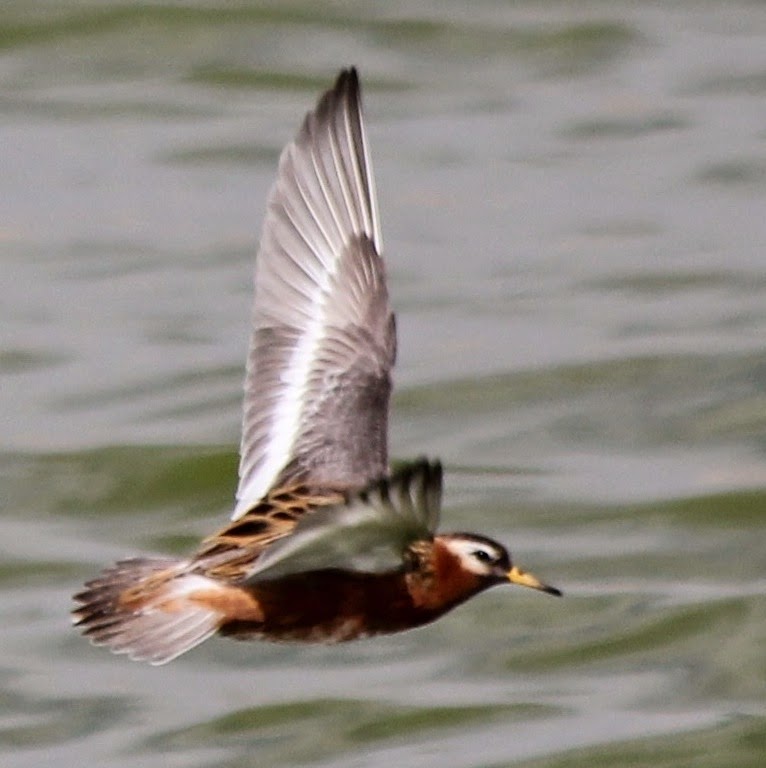
Generally we brace ourselves for one-day-wonders when something cool turns up... the Red Phalarope Dale Ohl found on Sunday stuck around through at least 5:45 pm on Monday, though. That evening we got 1.5 inches of rain in the span of a few hours and by this morning it was gone. No body was found, so we'll just wish her the best.
Blurry, they may be. But what a bird. Absolutely stunning creature. Very fortunate to have crossed paths.
Edit: Carolyn Ohl's post on the Red Phalarope is up on the Christmas Mountains Oasis blog.

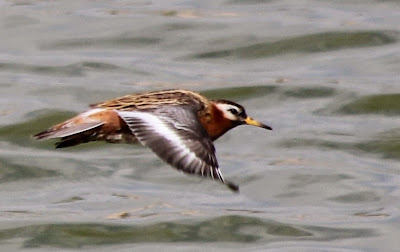


Blurry, they may be. But what a bird. Absolutely stunning creature. Very fortunate to have crossed paths.
Edit: Carolyn Ohl's post on the Red Phalarope is up on the Christmas Mountains Oasis blog.


Sunday, June 15, 2014

Red Phalarope, BREEDING PLUMAGE, Marathon Treatment Ponds - PRIVATE Property
YES, THEY ACTUALLY COME IN RED! And this is the first time I have seen it in breeding plumage. What a thrill!
Remember, this is Private Property. Contact, preferably via text, Heidi for arranging access.
Dale Ohl of Alpine and Canton, TX originally spotted the bird as the three of us ventured to the ponds this morning. More later, perhaps. Here are a few photos:


A general range map for this species:

**range map is from: http://offline.whatbird.com/obj/643/_/Red_Phalarope.aspx
Yes, that orange up there is its summer breeding range.
Remember, this is Private Property. Contact, preferably via text, Heidi for arranging access.
Dale Ohl of Alpine and Canton, TX originally spotted the bird as the three of us ventured to the ponds this morning. More later, perhaps. Here are a few photos:
 |
| Red Phalarope (Phalaropus fulicarius) |


A general range map for this species:

**range map is from: http://offline.whatbird.com/obj/643/_/Red_Phalarope.aspx
Yes, that orange up there is its summer breeding range.
Wednesday, June 11, 2014
Guest Post - John Mariani (Davis Mts, Big Bend)
Post shared with permission:
This weekend I made a trip to the Davis Mountains. Originally I had planned on going from there to the Guadalupe Mountains, but I got some of my target birds for the Guadalupes in the Davis Mountains, so I opted for Big Bend instead.
On Thursday, on my way to the Davis Mountains, I took a detour off I-10 onto 290, which makes a loop back to I-10 (I think this is all in Crockett Co.). Had Gray Vireo in the canyon below the picnic area about 9 miles from I-10. At Fort Lancaster Historic Site I had Curve-billed Thrasher, Black-throated and Lark Sparrows, and Orchard Oriole.
While driving along Limpia Creek between Balmorhea and Fort Davis I spotted a Common Black Hawk perched in a tall cottonwood. I stopped to check it out, and watched it fly to a nest in another cottonwood. There was at least one downy chick in the nest.
The bird blinds at Davis Mountains State Park were attracting a lot of birds. Montezuma Quail have been coming to the bird blind on the right, just before the campgrounds. According to the log there, they have been seen almost daily, usually in the morning or late in the evening. On Thursday evening they were a no-show. I stopped there again at 8:30 the next morning, and a pair of Montezuma Quail were already there. Some people approaching the blind scared them off, but they returned briefly at 9:14. Other birds coming to the feeders/running water at the blinds included Acorn and Ladder-backed Woodpeckers, Cassin’s Kingbirds, a pair of Hepatic Tanagers, Blue and Black-headed Grosbeaks, Canyon Towhee, Lesser Goldfinch, Rufous-crowned, Chipping, and Black-throated Sparrows, and Scott’s Oriole. Only hummingbird species I saw at the feeders was Black-chinned.
Walking from the park entrance back through the campgrounds I saw Greater Roadrunner, LOTS more Cassin’s Kingbirds, Western Wood-Pewees, Say’s Phoebe, Western Scrub Jay, Cactus and Bewick’s Wrens, Summer Tanager, and more Blue Grosbeaks. At night it was really quiet in the park – didn’t hear Common Poorwill or any owls.
On the afternoon of 6/5 and early morning of 6/6 I birded the Lawrence E. Wood Picnic Area. Birds seen there and at the beginning of the Madera Canyon Trail included Cooper’s Hawk on a nest, Gray Flycatcher, Western Wood-Pewee, Ash-throated Flycatcher, Cassin’s Kingbird, Plumbeous Vireo, White-breasted Nuthatch, Western Bluebird, Grace’s Warbler, Hepatic Tanager, Black-headed Grosbeak, and Chipping Sparrow.
Driving 118 from Davis Mountains State Park toward Mt. Locke, where the road starts a winding ascend through patches of brush with flowering agaves, I had Scott’s Oriole and Rufous-crowned and Black-chinned Sparrows. Farther upslope, in a more wooded area, I saw a Hepatic Tanager singing alongside the road.
On the afternoon of 6/6 I hiked the Pinnacles Trail up to Boot Canyon in the Chisos. The ascent to the trail summit was a three-hour ordeal (not fun, felt like I was gonna have heat stroke). Did see Bushtit on the way up, and had a brief look at a Zone-tailed Hawk from the trail’s summit. Spent the night in Boot Canyon. Right at dusk the Mexican Whip-poor-wills started calling...everywhere...at times there were 3 or 4 going simultaneously. Joined a group of birders from Kingsville for owling, and in about an hour and a half we managed to see Whip-poor-will, Western Screech-Owl, and Flammulated Owl. Later I heard a pair of Western Screech-Owls dueting near my campsite, and the Whips were still calling – sometimes sounding like they were only a stone’s throw from my tent - when I finally fell asleep.
On the morning of 6/7, after the Whips finally shut up, I hiked the Juniper Canyon Trail from Boot Springs to the South Rim. The very orange probable Hepatic x Western Tanager was singing right above Boot Springs, with a pair of Hepatic Tanagers nearby. Along the Juniper Canyon Trail I had 4 Band-tailed Pigeons, Blue-throated and Broad-tailed Hummingbirds, Cordilleran Flycatcher, about a half dozen Colima Warblers, and an adult Painted Redstart with 3-4 recently fledged young (saw another redstart at Boot Springs, and one was heard singing down by the campgrounds). Had a Crissal Thrasher where the Juniper Canyon Trail meets the South Rim Trail.
Returned to Chisos Basin via Laguna Meadows – another grueling ordeal, but at least this time it was mostly downhill. Had another Hepatic Tanager down the trail, which made a total of 8 or 8.5 Hepatics for the trip, depending on how you count that weird hybrid at Boot Springs.
The group from Kingsville told me that they had Lucifer and Blue-throated Hummingbirds the day before near the water treatment plant below the Chisos Basin Campground. After recovering from the the long hike down to the Chisos Basin I went to check it out. There is a little drainage lined with reeds below the water treatment plant, and I saw a male Black-chinned and female Lucifer coming to the yellow flowers of the tree tobacco growing along this drainage. Other birds I saw there included a Yellow-billed Cuckoo and male Indigo Bunting.
In the desert scrub around the ranger station at Panther Junction I had Verdins, Black-tailed Gnatcatchers, and Pyrrhuloxias.
On Highway 385, about 6.8 miles north of Marathon, I found Susan Foster and her birding posse scoping a prairie dog town for Burrowing Owl. Lucky for me they were there when I drove by, because the approximate mileage I had to this site was incorrect - if I hadn’t seen them on the side of the road I would have driven right past the spot. Got to see the owl through their scope, and a little farther north, in the same prairie dog town, I had a pair of Scaled Quail. Farther north there were Cassin’s Sparrows singing in the grassland, and at about 22 miles from Marathon I saw a male Bronzed Cowbird on the roadside.
Special thanks to Sheridan Coffey for directions to some of my target birds, and to the birders from Kingsville (wish I could remember the names!) -
John Mariani
Lumberton, TX
This weekend I made a trip to the Davis Mountains. Originally I had planned on going from there to the Guadalupe Mountains, but I got some of my target birds for the Guadalupes in the Davis Mountains, so I opted for Big Bend instead.
On Thursday, on my way to the Davis Mountains, I took a detour off I-10 onto 290, which makes a loop back to I-10 (I think this is all in Crockett Co.). Had Gray Vireo in the canyon below the picnic area about 9 miles from I-10. At Fort Lancaster Historic Site I had Curve-billed Thrasher, Black-throated and Lark Sparrows, and Orchard Oriole.
While driving along Limpia Creek between Balmorhea and Fort Davis I spotted a Common Black Hawk perched in a tall cottonwood. I stopped to check it out, and watched it fly to a nest in another cottonwood. There was at least one downy chick in the nest.
The bird blinds at Davis Mountains State Park were attracting a lot of birds. Montezuma Quail have been coming to the bird blind on the right, just before the campgrounds. According to the log there, they have been seen almost daily, usually in the morning or late in the evening. On Thursday evening they were a no-show. I stopped there again at 8:30 the next morning, and a pair of Montezuma Quail were already there. Some people approaching the blind scared them off, but they returned briefly at 9:14. Other birds coming to the feeders/running water at the blinds included Acorn and Ladder-backed Woodpeckers, Cassin’s Kingbirds, a pair of Hepatic Tanagers, Blue and Black-headed Grosbeaks, Canyon Towhee, Lesser Goldfinch, Rufous-crowned, Chipping, and Black-throated Sparrows, and Scott’s Oriole. Only hummingbird species I saw at the feeders was Black-chinned.
Walking from the park entrance back through the campgrounds I saw Greater Roadrunner, LOTS more Cassin’s Kingbirds, Western Wood-Pewees, Say’s Phoebe, Western Scrub Jay, Cactus and Bewick’s Wrens, Summer Tanager, and more Blue Grosbeaks. At night it was really quiet in the park – didn’t hear Common Poorwill or any owls.
On the afternoon of 6/5 and early morning of 6/6 I birded the Lawrence E. Wood Picnic Area. Birds seen there and at the beginning of the Madera Canyon Trail included Cooper’s Hawk on a nest, Gray Flycatcher, Western Wood-Pewee, Ash-throated Flycatcher, Cassin’s Kingbird, Plumbeous Vireo, White-breasted Nuthatch, Western Bluebird, Grace’s Warbler, Hepatic Tanager, Black-headed Grosbeak, and Chipping Sparrow.
Driving 118 from Davis Mountains State Park toward Mt. Locke, where the road starts a winding ascend through patches of brush with flowering agaves, I had Scott’s Oriole and Rufous-crowned and Black-chinned Sparrows. Farther upslope, in a more wooded area, I saw a Hepatic Tanager singing alongside the road.
On the afternoon of 6/6 I hiked the Pinnacles Trail up to Boot Canyon in the Chisos. The ascent to the trail summit was a three-hour ordeal (not fun, felt like I was gonna have heat stroke). Did see Bushtit on the way up, and had a brief look at a Zone-tailed Hawk from the trail’s summit. Spent the night in Boot Canyon. Right at dusk the Mexican Whip-poor-wills started calling...everywhere...at times there were 3 or 4 going simultaneously. Joined a group of birders from Kingsville for owling, and in about an hour and a half we managed to see Whip-poor-will, Western Screech-Owl, and Flammulated Owl. Later I heard a pair of Western Screech-Owls dueting near my campsite, and the Whips were still calling – sometimes sounding like they were only a stone’s throw from my tent - when I finally fell asleep.
On the morning of 6/7, after the Whips finally shut up, I hiked the Juniper Canyon Trail from Boot Springs to the South Rim. The very orange probable Hepatic x Western Tanager was singing right above Boot Springs, with a pair of Hepatic Tanagers nearby. Along the Juniper Canyon Trail I had 4 Band-tailed Pigeons, Blue-throated and Broad-tailed Hummingbirds, Cordilleran Flycatcher, about a half dozen Colima Warblers, and an adult Painted Redstart with 3-4 recently fledged young (saw another redstart at Boot Springs, and one was heard singing down by the campgrounds). Had a Crissal Thrasher where the Juniper Canyon Trail meets the South Rim Trail.
Returned to Chisos Basin via Laguna Meadows – another grueling ordeal, but at least this time it was mostly downhill. Had another Hepatic Tanager down the trail, which made a total of 8 or 8.5 Hepatics for the trip, depending on how you count that weird hybrid at Boot Springs.
The group from Kingsville told me that they had Lucifer and Blue-throated Hummingbirds the day before near the water treatment plant below the Chisos Basin Campground. After recovering from the the long hike down to the Chisos Basin I went to check it out. There is a little drainage lined with reeds below the water treatment plant, and I saw a male Black-chinned and female Lucifer coming to the yellow flowers of the tree tobacco growing along this drainage. Other birds I saw there included a Yellow-billed Cuckoo and male Indigo Bunting.
In the desert scrub around the ranger station at Panther Junction I had Verdins, Black-tailed Gnatcatchers, and Pyrrhuloxias.
On Highway 385, about 6.8 miles north of Marathon, I found Susan Foster and her birding posse scoping a prairie dog town for Burrowing Owl. Lucky for me they were there when I drove by, because the approximate mileage I had to this site was incorrect - if I hadn’t seen them on the side of the road I would have driven right past the spot. Got to see the owl through their scope, and a little farther north, in the same prairie dog town, I had a pair of Scaled Quail. Farther north there were Cassin’s Sparrows singing in the grassland, and at about 22 miles from Marathon I saw a male Bronzed Cowbird on the roadside.
Special thanks to Sheridan Coffey for directions to some of my target birds, and to the birders from Kingsville (wish I could remember the names!) -
John Mariani
Lumberton, TX
Sunday, June 8, 2014
Lapland the 5th
 |
| Lapland Longspur (Calcarius lapponicus) |
In our brief four years in Marathon, we have become quite the Longspur enthusiasts. Something about the frozen gusts of wind blasting through your very soul... Who are we kidding? In the last year, access to private ponds has opened up a whole new world of longspur observation: less windy, less cold, lower numbers than the prairie dog town, but better looks.

I digress. This was about Lapland Longspurs. First record for Brewster County was a cat kill at the Marathon Motel. Second was road kill on Hwy 90. Third and fourth were very much alive just north of the prairie dog town on 385, as Matt was able to come and confirm that I was not hallucinating.
Fifth record... this is June 8th, all self respecting longspurs should have left in late March or late April (McCown's and Chestnut-collared, respectively). But the dark peep foraging on the bank next to a Western Sandpiper and a Baird's Sandpiper... It turned around and looked an awful lot like a Horned Lark. But it just wasn't quite Horned Lark. Silly Lapland Longspur, why are you so geographically confused?
I hereby hand the post over to Matt and a few more of his photos:


Edit: check out the range map for Lapland Longspur in summer!
Tuesday, June 3, 2014
500 Lucifer Hummingbirds
If the title didn't catch your eye, there's no telling what would! Happy belated 500th Lucifer Hummingbird (banded) to Kelly Bryan and WTARI - WestTexasAvianResearch.org - Carolyn Ohl does an excellent job of covering the May 26th event on her Christmas Mountains Oasis: Milestone Banding Day post.
Tuesday, May 27, 2014
Pipevine at Post Park
Post Road and Post Park were quite birdy (hat-tip to Bill Sain for another excellent adventure), but the highlight was simply being outside on a fantastic day. Admittedly, I did sigh that there were no leps around and a Queen, Pipevine Swallowtail, and a mystery skipper decided to cooperate. Not that any of them are earth shattering, but it seems to have been a quiet spring for butterflies, perhaps due to lack of moisture.
Bird list for Post Road here and bird list for Post Park here.
 |
| Pipevine Swallowtail, Battus philenor. Post Park, Marathon/Brewster Co, TX. 27 May 2014. |
Bird list for Post Road here and bird list for Post Park here.
Monday, May 26, 2014
26 May 2014 SW Ponds / Private
What a difference a day or two makes! We had lower oriole numbers and diversity, higher phalarope numbers, MUCH higher peep numbers and generally similar flycatcher numbers.
Other than a probable Zone-tailed Hawk on the way to the ponds (FOS ZTHA being seen yesterday), and a White-faced Ibis primary on the berm (none seen since the 3rd, likely due to lack of observers), the eBird list pretty much says it all...
31 Species:
10 Mallard (Mexican) Anas platyrhynchos diazi
2 Blue-winged Teal Anas discors
3 Green-winged Teal Anas crecca
6 Ruddy Duck Oxyura jamaicensis - Accurate count
4 Scaled Quail Callipepla squamata
2 Turkey Vulture Cathartes aura
3 Red-tailed Hawk Buteo jamaicensis
6 Killdeer Charadrius vociferus
2 Spotted Sandpiper Actitis macularius
1 Stilt Sandpiper Calidris himantopus - Pronounced white eyebrow. Taller, longer-necked than neighboring Western SPs. Drooping bill longer than width of head. Tail reminiscent of yellowlegs spp.
5 White-rumped Sandpiper Calidris fuscicollis - In flight, U-shaped broad white rump patch. Comparable in size to nearby Stilt and Western SP. Slightly larger than nearby Spotted SP.
1 Western Sandpiper Calidris mauri - Smaller peep compared to nearby Stilt SP.Clean white underneath w/o connecting collar. Upperside tail whitish with dark middle stripe (inner retrices) above when in flight. Dark legs.
5 Wilson's Phalarope Phalaropus tricolor
3 White-winged Dove Zenaida asiatica
1 Mourning Dove Zenaida macroura
1 Common Nighthawk Chordeiles minor
1 Say's Phoebe Sayornis saya
2 Ash-throated Flycatcher Myiarchus cinerascens
2 Cassin's Kingbird Tyrannus vociferans
4 Western Kingbird Tyrannus verticalis
3 Scissor-tailed Flycatcher Tyrannus forficatus
4 Barn Swallow Hirundo rustica
2 Cave Swallow Petrochelidon fulva
1 Cactus Wren Campylorhynchus brunneicapillus
1 Northern Mockingbird Mimus polyglottos
3 Lark Sparrow Chondestes grammacus
5 Black-throated Sparrow Amphispiza bilineata
2 Pyrrhuloxia Cardinalis sinuatus
3 Brown-headed Cowbird Molothrus ater
1 Orchard Oriole Icterus spurius
3 Bullock's Oriole Icterus bullockii
 |
| White-faced Ibis primary flight feather. |
31 Species:
10 Mallard (Mexican) Anas platyrhynchos diazi
2 Blue-winged Teal Anas discors
3 Green-winged Teal Anas crecca
6 Ruddy Duck Oxyura jamaicensis - Accurate count
4 Scaled Quail Callipepla squamata
2 Turkey Vulture Cathartes aura
3 Red-tailed Hawk Buteo jamaicensis
6 Killdeer Charadrius vociferus
2 Spotted Sandpiper Actitis macularius
1 Stilt Sandpiper Calidris himantopus - Pronounced white eyebrow. Taller, longer-necked than neighboring Western SPs. Drooping bill longer than width of head. Tail reminiscent of yellowlegs spp.
5 White-rumped Sandpiper Calidris fuscicollis - In flight, U-shaped broad white rump patch. Comparable in size to nearby Stilt and Western SP. Slightly larger than nearby Spotted SP.
1 Western Sandpiper Calidris mauri - Smaller peep compared to nearby Stilt SP.Clean white underneath w/o connecting collar. Upperside tail whitish with dark middle stripe (inner retrices) above when in flight. Dark legs.
5 Wilson's Phalarope Phalaropus tricolor
3 White-winged Dove Zenaida asiatica
1 Mourning Dove Zenaida macroura
 |
| Year + old box turtle shell, sun bleaching. |
1 Common Nighthawk Chordeiles minor
1 Say's Phoebe Sayornis saya
2 Ash-throated Flycatcher Myiarchus cinerascens
2 Cassin's Kingbird Tyrannus vociferans
4 Western Kingbird Tyrannus verticalis
3 Scissor-tailed Flycatcher Tyrannus forficatus
4 Barn Swallow Hirundo rustica
2 Cave Swallow Petrochelidon fulva
1 Cactus Wren Campylorhynchus brunneicapillus
1 Northern Mockingbird Mimus polyglottos
3 Lark Sparrow Chondestes grammacus
5 Black-throated Sparrow Amphispiza bilineata
2 Pyrrhuloxia Cardinalis sinuatus
3 Brown-headed Cowbird Molothrus ater
1 Orchard Oriole Icterus spurius
3 Bullock's Oriole Icterus bullockii
 |
| The Glass Mountains from the south, as seen from the ponds. |
Saturday, May 24, 2014
24 May 2014 SW Ponds / Private
From my Texbirds post:
Better late than never -- yesterday morning's pre-work jaunt to the ponds (private property) with Dale Ohl, Bill Sain, and Julie Oesper yielded an underwhelming variety of waterfowl but an excellent visit overall. I guess the summer waterfowl doldrums are expected by now, but I hadn't anticipated such good oriole diversity: multiple Scott's, Bullocks, and Orchard, and a stray Hooded; last spring one male Hooded stuck around Post Park, but the habitat there is far, far better than at the ponds! One stray Wilson's Phalarope was nice, along with a late, unspotted Spotted Sandpiper.
Otherwise, it was the usual suspects - Lark Sparrow, Curve-billed Thrasher, Vermilion Flycatcher, Yellow-headed Blackbird, Cassin's and Western Kingbirds, Scissor-tailed Flycatcher, Scaled Quail, itty-bitty Killdeerlings, and lots of ruckus from Killdeer parents.
Good birds, good company, what more can you ask for!
***
6 Mallard (Mexican) Anas platyrhynchos diazi
4 Blue-winged Teal Anas discors
3 Ruddy Duck Oxyura jamaicensis
2 Scaled Quail Callipepla squamata
5 Turkey Vulture Cathartes aura
4 Red-tailed Hawk Buteo jamaicensis
9 Killdeer Charadrius vociferus
1 Spotted Sandpiper Actitis macularius
1 Wilson's Phalarope Phalaropus tricolor
8 White-winged Dove Zenaida asiatica
2 Mourning Dove Zenaida macroura
1 hummingbird sp. Trochilidae sp. - likely BCHU
1 Say's Phoebe Sayornis saya
2 Vermilion Flycatcher Pyrocephalus rubinus
2 Ash-throated Flycatcher Myiarchus cinerascens
2 Cassin's Kingbird Tyrannus vociferans
2 Western Kingbird Tyrannus verticalis
2 Scissor-tailed Flycatcher Tyrannus forficatus
1 Bell's Vireo Vireo bellii - heard only by Dale
1 Bank Swallow Riparia riparia
2 Barn Swallow Hirundo rustica
7 Cave Swallow Petrochelidon fulva
1 Curve-billed Thrasher Toxostoma curvirostre
1 Northern Mockingbird Mimus polyglottos
5 Lark Sparrow Chondestes grammacus
1 Yellow-headed Blackbird Xanthocephalus xanthocephalus
3 Great-tailed Grackle Quiscalus mexicanus
1 Bronzed Cowbird Molothrus aeneus
2 Orchard Oriole Icterus spurius
1 Hooded Oriole Icterus cucullatus
3 Bullock's Oriole Icterus bullockii
2 Scott's Oriole Icterus parisorum
* post is backdated for the date of observations, not date of Texbirds post nor compiling of blog post!
Better late than never -- yesterday morning's pre-work jaunt to the ponds (private property) with Dale Ohl, Bill Sain, and Julie Oesper yielded an underwhelming variety of waterfowl but an excellent visit overall. I guess the summer waterfowl doldrums are expected by now, but I hadn't anticipated such good oriole diversity: multiple Scott's, Bullocks, and Orchard, and a stray Hooded; last spring one male Hooded stuck around Post Park, but the habitat there is far, far better than at the ponds! One stray Wilson's Phalarope was nice, along with a late, unspotted Spotted Sandpiper.
Otherwise, it was the usual suspects - Lark Sparrow, Curve-billed Thrasher, Vermilion Flycatcher, Yellow-headed Blackbird, Cassin's and Western Kingbirds, Scissor-tailed Flycatcher, Scaled Quail, itty-bitty Killdeerlings, and lots of ruckus from Killdeer parents.
Good birds, good company, what more can you ask for!
***
 |
| There's a pond over there somewhere... Dale, Bill, and Julie's shadow. |
4 Blue-winged Teal Anas discors
3 Ruddy Duck Oxyura jamaicensis
2 Scaled Quail Callipepla squamata
5 Turkey Vulture Cathartes aura
4 Red-tailed Hawk Buteo jamaicensis
9 Killdeer Charadrius vociferus
1 Spotted Sandpiper Actitis macularius
1 Wilson's Phalarope Phalaropus tricolor
8 White-winged Dove Zenaida asiatica
2 Mourning Dove Zenaida macroura
1 hummingbird sp. Trochilidae sp. - likely BCHU
1 Say's Phoebe Sayornis saya
2 Vermilion Flycatcher Pyrocephalus rubinus
2 Ash-throated Flycatcher Myiarchus cinerascens
2 Cassin's Kingbird Tyrannus vociferans
2 Western Kingbird Tyrannus verticalis
2 Scissor-tailed Flycatcher Tyrannus forficatus
1 Bell's Vireo Vireo bellii - heard only by Dale
1 Bank Swallow Riparia riparia
2 Barn Swallow Hirundo rustica
7 Cave Swallow Petrochelidon fulva
1 Curve-billed Thrasher Toxostoma curvirostre
1 Northern Mockingbird Mimus polyglottos
5 Lark Sparrow Chondestes grammacus
1 Yellow-headed Blackbird Xanthocephalus xanthocephalus
3 Great-tailed Grackle Quiscalus mexicanus
1 Bronzed Cowbird Molothrus aeneus
2 Orchard Oriole Icterus spurius
1 Hooded Oriole Icterus cucullatus
3 Bullock's Oriole Icterus bullockii
2 Scott's Oriole Icterus parisorum
* post is backdated for the date of observations, not date of Texbirds post nor compiling of blog post!
Subscribe to:
Posts (Atom)