The following content was kindly approved for sharing by Stu Wilson, intrepid Breeding Bird Survey adventurer currently living in FL - he's done WTX BBS routes for many years and sent his end of route summary. This is shared with his permission, and with our gratitude for his efforts!
* Post Park was mistakenly listed as being south of Marfa, in Presidio County: it has been corrected to being south of Marathon, in Brewster County. Links were modified to be blog friendly.
***
All-
I've put together a little wrap-up for my 4-11May2015 central Trans-Pecos BBS trip. Besides my three current BBS routes, I made a number of "general interest birding" stops, many of which I entered into eBird. The area continues to suffer from the effects of drought as well as the freeze and fire of 2011, but there were signs of recovery, e.g. good numbers of Scaled Quail and Greater Roadrunner. In general, neotropical migrants were in short supply anywhere I went.
El Paso Memorial Park (FWTX 9) 4May2015
One of the best opportunities to find migrants within the El Paso city limits is this urban park (El Paso County). However, I found very few- a Western Wood-Pewee, an Audubon's Yellow-rump, and several Wilson's Warbler- amongst 20 species total. eBird checklist here
McNary Reservoir 5May2015
Auduboners generally have permission to visit this water body located about 80 miles east of El Paso in Hudspeth County. I tallied 34 species in an hour including both Western and Clark's Grebes, as well as a pair of Red-breasted Mergansers, possibly a new May record for the area. eBird checklist here
Marathon- Ft Pena Colorado Pk (The Post) (FWTX 28) 5May2015
This popular birding stop 5 miles south of Marathon in Brewster County was flush with water and yielded 26 species, but no rarities and just a couple of migrants. eBird checklist here
Alamito Creek Preserve 6May2015
This was my fourth visit to this cottonwood-lined riparian desert strip 35 miles south of Marfa in Presidio County. I started out the walk with Robert Potts, president of property owner Dixon Water Foundation, as well as Jay Pruett from Tulsa and Bob Ayres from Austin. Those three had to turn back mid-morning to tend to some business, but I walked the full 3.5-mile segment, and return, picking up 40 spp. Although there were some impressive numbers of individuals (52 House Finch, 60 Mourning Dove, 58 Northern Mockingbird, 42 Orchard Oriole, 45 Summer Tanager, and 46 Vermilion Flycatcher), and some good raptor activity (2 nesting pairs of Zone-tailed and 1 pair of Swainson's Hawk), migrants were few... only two species of warbler (Audubon's Yellow-rumped and Wilson's). eBird checklist here
Coyanda Draw BBS (Pecos Co 35 mi WSW of Ft Stockton) 7May2015 Habitat: dry and desolate Chihuahuan Desert scrub
I had to contend with only 2 vehicles the entire route! Veteran BBSers know what a luxury that is. The route produced 25 spp with Northern Mockingbird taking home the bacon at 61 and Scaled Quail trailing with 50.
* The Barn Owls at Stop 1 have apparently been evicted by a pair of Great Horned Owls
* 4 Lesser Nighthawks was very low
* Cassin's and Black-throated Sparrow made nice showings with 28 each
* Cactus Wren (avg 20+) has not rebounded on this route as I had only 2
Balmorhea- Sandia Wetlands (FWTX 20A) 7May2015
I had not previously visited this small facility east of Balmorhea in Reeves County, but was glad I did. I found 25 spp highlighted by Cinnamon Teal, Black-necked Stilt, American Avocet, Baird's Sandpiper, Long-billed Dowitcher, Wilson's Phalarope, Scissor-tailed Flycatcher, Bank Swallow, Grasshopper Sparrow, and Yellow-headed Blackbird. eBird checklist here
Balmorhea Lake - Sandia Wetlands (FWTX 20) 7May2015
I did a loop around the lake, but it was now late afternoon and there just wasn't much happening. I noted about 16 spp, including both Aechmophorus grebes and a couple late Eared Grebes. A lone Ruddy Duck also seemed late.
Toyahvale BBS (Jeff Davis Co between Balmorhea and Ft Davis) 8May2015 Habitat: Davis Mtn foothills
This route was especially fire-ravaged in 2011. I turned up 32 spp with usual champ Northern Mockingbird taking top honors with 55 just overcoming a strong showing by resurging Scaled Quail at 50.
* The Elf Owl pair, present the last two years, could not be found
* Seven (7) Greater Roadrunner may be record for me for any route
* Twenty (20) Black-throated Sparrow was a strong showing
* No evidence of Cactus Wren recovery on this route (avg 16) as I had only 4
* 3 Painted Bunting and 1 Vermilion Flycatcher added some color to things
Bear Mountain BBS (Jeff Davis Co on the NW flanks of Davis Mountains) 9May2015 Habitat: Davis Mtn foothills (desert transitioning to oak/juniper)
This route has become my favorite for reasons I can't quite pinpoint. Only encountering five (5) vehicles on a route with a nicely paved road certainly helps. I tallied 34 spp with Northern Mockingbird achieving top dog at 27 individuals withstanding a strong challenge from Cactus Wren with 24. The Cactus Wren total is right at the historic average and suggests, on this route at least, the species is recovering.
* Cassin's Sparrow (avg 16) curiously absent from this route
* Six (6) Greater Roadrunner might be a record except for Toyahvale above
* Eighteen (18) Canyon Towhees might be a record for me for any route
* A Yellow-breasted Chat lustily singing in the wide open was a nice surprise
Madera Canyon Trail (FWTX 25) 9May2015
This 2.5-mile loop trail starts (and ends) at the south end of the Lawrence E Wood Picnic Area on TX 118 in Jeff Davis County. Most of the juniper trees are dead or dying lending a desolate air, but I nonetheless managed 17 spp including a rampaging young Cooper's Hawk and a Hepatic Tanager pair where the female was doing the singing. eBird checklist here
Big Bend NP- Chisos Basin 10May2015
I had run into some birders from Maryland at Davis Mountains SP who had just been to BBNP (Brewster County) and told me of the rarities lurking there: Short-tailed Hawk, Northern Pygmy-Owl, Flame-colored Tanager, and Evening Grosbeak. Given my limited time, I decided the latter three were out of reach, but I was on point for the STHA, which I thought I understood them to say was being seen (a dark morph and a light morph??) in the Chisos Basin from the lodge area. It didn't fill me with confidence when each of the five (5) rangers I quizzed indicated they were unaware of any rare hawks, and in the end I failed to turn one up. In the course of things, I did a long mid-day hike through the campgrounds, down to the sewage treatment plant, and out and back on the Window Trail, tallying about 17 species, but nothing unexpected. That evening I hiked up the Pinnacles Trail about a half-mile above the cottages and did a 7-9pm sentry duty listening for Mexican Whip-poor-will, but heard not a one. The mountain lion signs say "don't hike alone" and "don't hike at night" and I must confess this weighed on me as the day's light grew dim. My overnight accommodation was a room in the Emory Peak Lodge area but, despite leaving my windows open all night and doing a couple of short local hikes, I heard no owl nor nightjar at all.
Big Bend NP- Cottonwood Campground (FWTX 40) 11May2015
I got up early for the 38-mi drive to Cottonwood CG, arriving just after sunrise, and was promptly greeted by an Elf Owl. Other nuggets amongst 27 spp found were a Cassin's Vireo, a MacGillivray's Warbler, and several singing Yellow-breasted Chats. The prize, however, and the Bird of the Trip for me was a singing male Lucy's Warbler which I found just across the entrance road from the Amphitheater... my first new Texas bird (#489) since a Canada Warbler at Hornsby Bend in Austin on 19Sep2011. eBird checklist here
Out,
Stu

Blogging from Marathon, TX about birding, butterflies, moths and more. Exploring the gems of Brewster County, Post Park, Big Bend National Park and the surrounding region. Bird watching: Big Bend and beyond!
Showing posts with label Chisos Basin. Show all posts
Showing posts with label Chisos Basin. Show all posts
Thursday, May 14, 2015


Saturday, April 12, 2014
Big Bend National Park in a nutshell
The Texbirds post:
Where to begin! Eleven days of mostly river and lowlands...
I was not in the high elevations, so can only say that Elf Owls and Common Poorwills are calling at night at the Chisos Basin campground, with Black-chinned Sparrows during the day. Common Black Hawk is back at Rio Grande Village, Gray Hawk is working between Gaging Station (do NOT suggest River Road) and Santa Elena. A Couch's Kingbird is present among Westerns at Cottonwood, Lucy's Warblers are thin along the river but should hopefully thicken in a week before thinning out again. RGV and Cottonwood both have Western Screech and Great Horned and Elf Owls and there were HUNDREDS of White-throated Swifts visible from the bridge on the RGV nature trail with a token Violet-green Swallow mid afternoon day before yesterday. Or the day before that. Brain is fried and I am hearing doves in my sleep!
There's a pair of Golden Eagles half way between Persimmon Gap and Marathon that seem quite interested in each other, if anyone has a hard time at the prairie dog town.
Inaccessible but photo'd in the last few months: Montezuma Quail in Big Bend Ranch State Park (via Laird, at the Barton Warnock VC), and Gambel's Quail on the westernmost edge of BBNP - I managed a shoddy audio recording, though i suppose a video of a calling mesquite counts as pic. My sketch of the sonograph is shameful ;)
Drink water.
-h
Heidi Trudell
Marathon, TX
***
Of course, the replies I got were asking about Lucifer Hummingbird (just go to the Christmas Mountains Oasis, it's easier than trying to find one in the park) and Colima Warbler (still a few days too early, and I wasn't up there, so... no. The answer is no.) But otherwise, that's the condensed version. The longer version is below.
Next up: Amistad. I am juggling bird surveys when not at the library and at the library when not juggling bird surveys and trying to get a truck repaired. No rest for the weary, but at least it is good exercise in beautiful country with excellent birds and a sense of adventure. And I'm not dead yet, so that's a perk. BBNP tends to be less than forgiving, so drink your water and don't push your luck!
Where to begin! Eleven days of mostly river and lowlands...
I was not in the high elevations, so can only say that Elf Owls and Common Poorwills are calling at night at the Chisos Basin campground, with Black-chinned Sparrows during the day. Common Black Hawk is back at Rio Grande Village, Gray Hawk is working between Gaging Station (do NOT suggest River Road) and Santa Elena. A Couch's Kingbird is present among Westerns at Cottonwood, Lucy's Warblers are thin along the river but should hopefully thicken in a week before thinning out again. RGV and Cottonwood both have Western Screech and Great Horned and Elf Owls and there were HUNDREDS of White-throated Swifts visible from the bridge on the RGV nature trail with a token Violet-green Swallow mid afternoon day before yesterday. Or the day before that. Brain is fried and I am hearing doves in my sleep!
There's a pair of Golden Eagles half way between Persimmon Gap and Marathon that seem quite interested in each other, if anyone has a hard time at the prairie dog town.
Inaccessible but photo'd in the last few months: Montezuma Quail in Big Bend Ranch State Park (via Laird, at the Barton Warnock VC), and Gambel's Quail on the westernmost edge of BBNP - I managed a shoddy audio recording, though i suppose a video of a calling mesquite counts as pic. My sketch of the sonograph is shameful ;)
Drink water.
-h
Heidi Trudell
Marathon, TX
***
Of course, the replies I got were asking about Lucifer Hummingbird (just go to the Christmas Mountains Oasis, it's easier than trying to find one in the park) and Colima Warbler (still a few days too early, and I wasn't up there, so... no. The answer is no.) But otherwise, that's the condensed version. The longer version is below.
 |
| Far western edge of Big Bend National Park, facing east. |
 |
| Santa Elena transect, facing SW. |
 |
| Gaging Station camp site, looking north. |
 |
| Dominguez Trailhead camp site, looking north. |
 |
| Del Nitos, if I am not mistaken, south of the Chisos, from the south. |
 |
| The Beagle, a Ford Expedition. Schooner of the precambrian seas. |
 |
| Ideal transect terrain, if lucky. That really distant mountain range is Mexico's border wall. |
 |
| Post-transect: Rio Grande to the left, Mexico to the right. |
 |
| Fun topography, best pic I could get of the easiest slope up from the wash. |
Tuesday, June 11, 2013
West Texas Trip via Sue Heath
Reposted with permission from Sue:
West Texas Trip
Jun 9
TexBirders,
Tom Morris, Tad Finnell and myself just returned from a quick West Texas trip where we had a fantastic time and got most of our target species. We started on Friday afternoon at Carolyn Ohl-Johnson's fantastic Christmas Mountains Oasis where we were treated to several Lucifer Hummingbirds, Black-chinned Hummingbirds, Blue Grosbeaks, House Finches, Painted Buntings and a male Varied Bunting coming to the feeders. It was a rainbow of western bird color! After a few hours there we moved onto Big Bend National Park. We stopped at the picnic area along TX 118 near Elephant Mountain and enjoyed a family of Vermilion Flycatchers, singing Bell's Vireos, and a Cassin's Kingbird (our target for the stop). In Study Butte we stopped at the gas station and had the biggest, cheapest ice cream cones any of us can remember. Excellent on a hot day! In the park we went straight to Panther Junction and then up to The Basin. We only had time to walk around a little bit but we found Scott's Orioles, Black-headed Grosbeaks, Mexican Jays, Cactus Wrens, Rufous-crowned Sparrow, Say's Phoebe, and of course Canyon Towhees. A pair of Say's Phoebes have a nest on top of one of the light fixtures that you can see from the lodge restaurant with three chicks. It was very fun watching them while we were eating.
The next morning we started at 5:00 and headed up the Pinnacles Trail. Around 5:40 we heard our first Mexican Whip-poor-will and 10 minutes later, as predicted by Greg Lavaty who we ran into at Carolyn's, several were singing around us at the large pine tree laying along the side of the trail. We hiked on and soon the Black-headed Grosbeaks started singing and then the Mexican Jays moved in clearly looking for a hand out. We did not indulge them. I made that mistake once before and they followed us for miles. Once we got to the switchbacks we started seeing the mountain species. Canyon Wrens singing from the cliff faces, White-throated Swifts and Violet-green Swallows chittering and soaring overhead, Acorn Woodpeckers making their raucous calls. It was great! A Band-tailed Pigeon winged by and a Spotted Towhee zoomed by clearly not happy we were invading his territory. The Cordilleran Flycatchers got going and we found our first Colima Warbler. Somewhere in there we were passed by two hikers, I jokingly said they could find the tanager and have it staked out for us as they passed. We reached the Emory Peak trail about 8:20 and were glad for the level trail onward to Boot Springs. As the boot came into view a Zone-tailed Hawk soared by. More Violet-green Swallows and some Common Ravens. We arrived at The Spot about 9:10 and the hikers were there and indeed had the bird all staked out. Within 10 minutes we had seen the Flame-colored Tanager and a couple young Painted Redstarts. We hung around and saw an adult Painted Redstart and several Blue-throated Hummingbirds, Hutton's Vireo and White-breasted Nuthatches. We also saw the female Western Tanager with the Flame-colored Tanager in tow. Fantastic!
We headed back down about 10:30 and got Black-tailed Gnatcatcher and Bushtits on our way down. It was a really great trip and I thank everyone who gave us advice and also the hikers for hanging around until us slow folks could get there to see the birds.
Sue
Susan A. Heath, PhD
Gulf Coast Bird Observatory
103 Hwy 332 West
Lake Jackson, TX 77566
979-480-0999
www.gcbo.org
West Texas Trip
Jun 9
TexBirders,
Tom Morris, Tad Finnell and myself just returned from a quick West Texas trip where we had a fantastic time and got most of our target species. We started on Friday afternoon at Carolyn Ohl-Johnson's fantastic Christmas Mountains Oasis where we were treated to several Lucifer Hummingbirds, Black-chinned Hummingbirds, Blue Grosbeaks, House Finches, Painted Buntings and a male Varied Bunting coming to the feeders. It was a rainbow of western bird color! After a few hours there we moved onto Big Bend National Park. We stopped at the picnic area along TX 118 near Elephant Mountain and enjoyed a family of Vermilion Flycatchers, singing Bell's Vireos, and a Cassin's Kingbird (our target for the stop). In Study Butte we stopped at the gas station and had the biggest, cheapest ice cream cones any of us can remember. Excellent on a hot day! In the park we went straight to Panther Junction and then up to The Basin. We only had time to walk around a little bit but we found Scott's Orioles, Black-headed Grosbeaks, Mexican Jays, Cactus Wrens, Rufous-crowned Sparrow, Say's Phoebe, and of course Canyon Towhees. A pair of Say's Phoebes have a nest on top of one of the light fixtures that you can see from the lodge restaurant with three chicks. It was very fun watching them while we were eating.
The next morning we started at 5:00 and headed up the Pinnacles Trail. Around 5:40 we heard our first Mexican Whip-poor-will and 10 minutes later, as predicted by Greg Lavaty who we ran into at Carolyn's, several were singing around us at the large pine tree laying along the side of the trail. We hiked on and soon the Black-headed Grosbeaks started singing and then the Mexican Jays moved in clearly looking for a hand out. We did not indulge them. I made that mistake once before and they followed us for miles. Once we got to the switchbacks we started seeing the mountain species. Canyon Wrens singing from the cliff faces, White-throated Swifts and Violet-green Swallows chittering and soaring overhead, Acorn Woodpeckers making their raucous calls. It was great! A Band-tailed Pigeon winged by and a Spotted Towhee zoomed by clearly not happy we were invading his territory. The Cordilleran Flycatchers got going and we found our first Colima Warbler. Somewhere in there we were passed by two hikers, I jokingly said they could find the tanager and have it staked out for us as they passed. We reached the Emory Peak trail about 8:20 and were glad for the level trail onward to Boot Springs. As the boot came into view a Zone-tailed Hawk soared by. More Violet-green Swallows and some Common Ravens. We arrived at The Spot about 9:10 and the hikers were there and indeed had the bird all staked out. Within 10 minutes we had seen the Flame-colored Tanager and a couple young Painted Redstarts. We hung around and saw an adult Painted Redstart and several Blue-throated Hummingbirds, Hutton's Vireo and White-breasted Nuthatches. We also saw the female Western Tanager with the Flame-colored Tanager in tow. Fantastic!
We headed back down about 10:30 and got Black-tailed Gnatcatcher and Bushtits on our way down. It was a really great trip and I thank everyone who gave us advice and also the hikers for hanging around until us slow folks could get there to see the birds.
Sue
Susan A. Heath, PhD
Gulf Coast Bird Observatory
103 Hwy 332 West
Lake Jackson, TX 77566
979-480-0999
www.gcbo.org
Sunday, June 2, 2013
BBNP and Flame-colored post
Flame-colored Tanager update and Big Bend National Park trip summary on Cameron Carver's blog post over at The Painted Bunny. We owe him a Hooded Oriole for such a great post!
(all tags here reflect the content of his post)
Matt's write-up from a few days later is here.
(all tags here reflect the content of his post)
Matt's write-up from a few days later is here.
Saturday, December 8, 2012
Red Crossbills Fly-by, Chisos Mtns, Big Bend National Park
The afternoon of 7 December 2012, I saw and heard 4 Red Crossbills fly over while I was hiking the Chisos Basin Loop Trail. From my naked eye observation all 4 appeared yellow. Take whatever mix of age and gender possibilities that could be made of.
If someone reading this is in the Chisos Basin cottages or lodge, or is heading up there today, maybe you'll be lucky during your hike. The Red Crossbill invasion this year has been great, if not frustrating. Frustrating because in all, but perhaps a single case in Van Horn, these birds suddenly appear then don't stick around for a following day or evening a following hour.
If someone reading this is in the Chisos Basin cottages or lodge, or is heading up there today, maybe you'll be lucky during your hike. The Red Crossbill invasion this year has been great, if not frustrating. Frustrating because in all, but perhaps a single case in Van Horn, these birds suddenly appear then don't stick around for a following day or evening a following hour.
Tuesday, December 4, 2012
December 1st, Big Bend National Park bird sightings
After birding Marathon on November 30, Catherine Winans headed to Big Bend National Park on December 1 with a few target birds in mind. With her permission, here's her note with observations from Rio Grande Village (Daniel's Ranch) and the Chisos Basin:
Matt and Heidi,
As promised, here is my Big Bend report, keeping in mind that I was target birding and did not make any complete surveys. Let me know if anything does not sound right.
About halfway between Panther Junction and RGV about ten quail on the side of the road quickly ducked into the brush. My impression was Bobwhite, but the maps in National Geographic suggest that Scaled would be more likely. [Scaled is the most likely quail in BBNP, though Gambel's becomes common further west. Bobwhite in the Trans-Pecos region tend to be small populations that have been released for hunting on private ranches. -h]
At Daniel Ranch, a juvenile Gray Hawk, 2 Black Phoebes, 1 Marsh Wren, 3 or 4 Yellow Rumps, 2 Common Raven, 2 Ruby-crowned Kinglets, 1 Verdin. One Coot at the silt ponds, and two Inca Doves. Quite sure I heard a Rock Wren on the hillside, but could not see it.
In the campgrounds, 3 or 4 Golden-fronted Woodpeckers, 7 Cardinals, 2 Great Blue Herons, 2 Blue-gray Gnatcatchers, 2 Roadrunners, more Ruby-crowned Kinglets.
It took me four hours to find one Black-throated Gray Warbler. The ones reported last week were with flocks of Yellow-rumps. There were not as many Rumps as I expected, a few singles, and a couple of small flocks. Finally found a few foraging birds in the grove behind the store, Yellow-rumps, Ruby-crowneds, and the lone male Black-throated Blue. [Fantastic sighting! Last report of Black-throated Blue Warbler out here was 23-24 September 2011, but while fall records are slightly predictable, this may be the first December record for the region!]
I did not see any male Vermilions. I think one female, but looked away and she moved before I had a good look.
So I did not get to The Basin until 2:45. Immediately remembered how much I love it there and booked a room for the night. I decided to skip The Guadalupes this trip, since I no longer needed Sage Thrasher. I looked for Black-chinned Sparrow for two hours. There was very little bird activity, a couple of calling Mexican Jays and an Acorn Woodpecker. Two Say's Phoebes and a Flicker near the dinning room just before dark. I was out at first light. White-winged Doves calling. Then four Mexican Jays flew in and landed in a tree for nice looks. A Cactus Wren calling. Several Ruby-crowned Kinglets. A Pyrrhuloxia was rustling around in the brush below a bush a few feet off the trail to the campground. I moved closer and he hopped up into the bush. I realized there was a second bird in the bush and got my binoculars on it in time for a good five second look at a Black-chinned Sparrow.
Three Black-crested Titmice near the cabins.
Then home in time to have a late dinner with my husband, daughter, son-in-law, and grandsons.
It was a great trip. Thanks so much to both of you for the good birds and great company.
Send me a picture and keep in touch.
Catherine
Matt and Heidi,
As promised, here is my Big Bend report, keeping in mind that I was target birding and did not make any complete surveys. Let me know if anything does not sound right.
About halfway between Panther Junction and RGV about ten quail on the side of the road quickly ducked into the brush. My impression was Bobwhite, but the maps in National Geographic suggest that Scaled would be more likely. [Scaled is the most likely quail in BBNP, though Gambel's becomes common further west. Bobwhite in the Trans-Pecos region tend to be small populations that have been released for hunting on private ranches. -h]
At Daniel Ranch, a juvenile Gray Hawk, 2 Black Phoebes, 1 Marsh Wren, 3 or 4 Yellow Rumps, 2 Common Raven, 2 Ruby-crowned Kinglets, 1 Verdin. One Coot at the silt ponds, and two Inca Doves. Quite sure I heard a Rock Wren on the hillside, but could not see it.
In the campgrounds, 3 or 4 Golden-fronted Woodpeckers, 7 Cardinals, 2 Great Blue Herons, 2 Blue-gray Gnatcatchers, 2 Roadrunners, more Ruby-crowned Kinglets.
It took me four hours to find one Black-throated Gray Warbler. The ones reported last week were with flocks of Yellow-rumps. There were not as many Rumps as I expected, a few singles, and a couple of small flocks. Finally found a few foraging birds in the grove behind the store, Yellow-rumps, Ruby-crowneds, and the lone male Black-throated Blue. [Fantastic sighting! Last report of Black-throated Blue Warbler out here was 23-24 September 2011, but while fall records are slightly predictable, this may be the first December record for the region!]
I did not see any male Vermilions. I think one female, but looked away and she moved before I had a good look.
So I did not get to The Basin until 2:45. Immediately remembered how much I love it there and booked a room for the night. I decided to skip The Guadalupes this trip, since I no longer needed Sage Thrasher. I looked for Black-chinned Sparrow for two hours. There was very little bird activity, a couple of calling Mexican Jays and an Acorn Woodpecker. Two Say's Phoebes and a Flicker near the dinning room just before dark. I was out at first light. White-winged Doves calling. Then four Mexican Jays flew in and landed in a tree for nice looks. A Cactus Wren calling. Several Ruby-crowned Kinglets. A Pyrrhuloxia was rustling around in the brush below a bush a few feet off the trail to the campground. I moved closer and he hopped up into the bush. I realized there was a second bird in the bush and got my binoculars on it in time for a good five second look at a Black-chinned Sparrow.
Three Black-crested Titmice near the cabins.
Then home in time to have a late dinner with my husband, daughter, son-in-law, and grandsons.
It was a great trip. Thanks so much to both of you for the good birds and great company.
Send me a picture and keep in touch.
Catherine
Sunday, November 25, 2012
Thanksgiving in the Trans-Pecos
From Willie Sekula, with permission... and a note of "The sparrow numbers were amazing especially on FM 1832!"
Date has been modified to reflect the 25 Nov post, so it may appear out of order for the RSS feed.
***
Derek Muschalek, Tim Lenz and I birded West Texas over an extended Thanksgiving. We birded Marathon, Big Bend National Park (Rio Grande Village, Dugout Wells, The Basin, Sam Nail Ranch, Cottonwood Campground, Santa Elena), Carolyn Ohl Johnson's Christmas Mountain Oasis (Many Thanks to Carolyn!), Alpine, Davis Mountains (Lawrence E Wood Picnic Area, McDonald Observatory), FM 1832, Balmorhea (Cemetery & Lake). We also made numerous stops along the various roads whenever we saw birds.
Overall the birding was very good. The number of sparrows and diversity was excellent with FM 1832 producing incredible numbers of Clay-colored, Brewer's, Vesper & White-crowned Sparrows along with Cassin's, Savannah & Grasshopper Sparrows. Overall we recorded 17 species of sparrows!
It was pretty exciting to arrive at Panther Junction on Wednesday afternoon while it was raining! A pretty rare sight in November. I think The Basin received 0.18" of rain that day/night.
There were still lots of blooming wildflowers (for Thanksgiving) with an amazing variety and number of butterflies (including a Mexican Silverspot at Rio Grande Village) along with a decent number of odonates.
Birds of Note:
Montezuma Quail (several calling birds at Lawrence E Wood)
Wild Turkey 4 (Lawrence E Wood)
American Bittern 1 (Lake Balmorhea)
Snowy Egret 1 (Lake Balmorhea)
Osprey 1 (Rio Grande Village)
Bald Eagle 1 adult (Lake Balmorhea)
Greater Yellowlegs 1 (Rio Grande Village)
Common Poorwill 1 (calling at Rio Grande Village)
White-throated Swift 24 (Casa Grande)
Anna's Hummingbird 4-5 (Rio Grande Village); 1 (old sewage ponds - The Basin)
Selasphorus sp. 1 (The Basin)
Williamson's Sapsucker 1 male (Marathon Cemetery - initially spotted by Derek) & another male (Lawrence E Wood)
Gray Flycatcher 1 (Cottonwood Campground)
Western Scrub-Jay 1 (The Basin)
Nine species of Wren (Thanksgiving Day):
Rock
Canyon
Cactus
House
Winter
Bewick's
Carolina
Marsh
Sedge (Rio Grande Village)
Varied Thrush 1 (Christmas Mountains Oasis)
Chestnut-collared Longspur 35 (Lake Balmorhea)
Black-throated Gray Warbler 5 (Rio Grande Village)
American Redstart 1 female (Cottonwood Campground - seen along Rio Grande River)
I may have left out some birds of note due to being very tired from a lot of driving! We ended up with 153 species for the trip.
Willie Sekula
Falls City
Date has been modified to reflect the 25 Nov post, so it may appear out of order for the RSS feed.
***
Derek Muschalek, Tim Lenz and I birded West Texas over an extended Thanksgiving. We birded Marathon, Big Bend National Park (Rio Grande Village, Dugout Wells, The Basin, Sam Nail Ranch, Cottonwood Campground, Santa Elena), Carolyn Ohl Johnson's Christmas Mountain Oasis (Many Thanks to Carolyn!), Alpine, Davis Mountains (Lawrence E Wood Picnic Area, McDonald Observatory), FM 1832, Balmorhea (Cemetery & Lake). We also made numerous stops along the various roads whenever we saw birds.
Overall the birding was very good. The number of sparrows and diversity was excellent with FM 1832 producing incredible numbers of Clay-colored, Brewer's, Vesper & White-crowned Sparrows along with Cassin's, Savannah & Grasshopper Sparrows. Overall we recorded 17 species of sparrows!
It was pretty exciting to arrive at Panther Junction on Wednesday afternoon while it was raining! A pretty rare sight in November. I think The Basin received 0.18" of rain that day/night.
There were still lots of blooming wildflowers (for Thanksgiving) with an amazing variety and number of butterflies (including a Mexican Silverspot at Rio Grande Village) along with a decent number of odonates.
Birds of Note:
Montezuma Quail (several calling birds at Lawrence E Wood)
Wild Turkey 4 (Lawrence E Wood)
American Bittern 1 (Lake Balmorhea)
Snowy Egret 1 (Lake Balmorhea)
Osprey 1 (Rio Grande Village)
Bald Eagle 1 adult (Lake Balmorhea)
Greater Yellowlegs 1 (Rio Grande Village)
Common Poorwill 1 (calling at Rio Grande Village)
White-throated Swift 24 (Casa Grande)
Anna's Hummingbird 4-5 (Rio Grande Village); 1 (old sewage ponds - The Basin)
Selasphorus sp. 1 (The Basin)
Williamson's Sapsucker 1 male (Marathon Cemetery - initially spotted by Derek) & another male (Lawrence E Wood)
Gray Flycatcher 1 (Cottonwood Campground)
Western Scrub-Jay 1 (The Basin)
Nine species of Wren (Thanksgiving Day):
Rock
Canyon
Cactus
House
Winter
Bewick's
Carolina
Marsh
Sedge (Rio Grande Village)
Varied Thrush 1 (Christmas Mountains Oasis)
Chestnut-collared Longspur 35 (Lake Balmorhea)
Black-throated Gray Warbler 5 (Rio Grande Village)
American Redstart 1 female (Cottonwood Campground - seen along Rio Grande River)
I may have left out some birds of note due to being very tired from a lot of driving! We ended up with 153 species for the trip.
Willie Sekula
Falls City
Friday, August 3, 2012
Buprestidae - metallic wood boring beetles
Here's a little splash of beetle color to compliment the previous butterfly post:
Lampetis drummondi - one of 308 species of Buprestids found in Texas.
This particular individual was downstream from Green Gulch, well up the road to the Chisos Basin. Several of its kin were present on junipers and just about every other tree/shrub along the stretch we walked. Perhaps Wednesday was Buprestid day at the park.

Bright blue legs don't seem like the best camouflage, but with a back like that...

I wonder how they perceive the view - even if hiding from the camera in the shade.

Skittish, yes. But what a lovely underside of pale flecking.

None of these photos do the eyes justice. The iridescence is similar to that of opal; if opal were a dark blue/black and on the face of a wood boring beetle.
This was our first encounter of the gorgeous wood-boring kind; we regularly see opuntia borers while walking the dogs. We pause and let them cross the street, and move on until there's more traffic - usually dung beetles. This year has been pretty crowded on the streets of Marathon... thank goodness for the rain!
Lampetis drummondi - one of 308 species of Buprestids found in Texas.
This particular individual was downstream from Green Gulch, well up the road to the Chisos Basin. Several of its kin were present on junipers and just about every other tree/shrub along the stretch we walked. Perhaps Wednesday was Buprestid day at the park.

Bright blue legs don't seem like the best camouflage, but with a back like that...

I wonder how they perceive the view - even if hiding from the camera in the shade.

Skittish, yes. But what a lovely underside of pale flecking.

None of these photos do the eyes justice. The iridescence is similar to that of opal; if opal were a dark blue/black and on the face of a wood boring beetle.
This was our first encounter of the gorgeous wood-boring kind; we regularly see opuntia borers while walking the dogs. We pause and let them cross the street, and move on until there's more traffic - usually dung beetles. This year has been pretty crowded on the streets of Marathon... thank goodness for the rain!
Sunday, June 24, 2012
It's daylight.
I'm so accustomed to armchair moth-ing (the equivalent of armchair birding, I suppose) that actually being outside in the light of day to look at pollinators was a strange change of pace. I'd met up with Andy Bankert midday to take him to the Christmas Mountains Oasis after he hiked Pinnacles Trail in Big Bend National Park for Colima Warbler. Even in the noonday heat, CMO was definitely worthwhile! We were officially looking for Lucifer Hummingbird (check), Varied Bunting (check) and Elf Owl (nope). Unofficially, I was really hoping to see the resident Mojave rattlesnake as well.
Vertebrates aside, we had a slew of flying insects. Probably 90% were mosquitoes (long overdue - as was the rain!) but the rest were dragonflies and damselflies and butterflies and...
Uresiphita reversalis - Genista Broom Moth
Unknown crambid-type moth

Clockwise from the blurry dark moth in the upper left:
Tarache quadriplaga - either that or one of the Ponometias
Kricogonia lyside - Lyside Sulphur
Ponometia semiflava - Half Yellow (look straight across to the right of the butterfly, it's yellow and dark blue-gray)
Palpita quadristigmalis - Four-spotted Palpita
Helicoverpa zea - Corn Earworm Moth

There were some other really impressive looking pollinators, but that's fodder for future posts! Definitely makes me wish I'd checked every beebrush plant on the property!
Back to birds for a moment - we had been emailed a note of caution from Carolyn before we headed to CMO... "Lucifers are here but not abundant. Kelly banded 10 yesterday." They may have been skittish, but they were certainly lovely!
Here's Andy's breakdown of the day, according to Facebook:
Long day! Left Marathon at 3 AM, made it to Boot Canyon by 6:15 for Flammulated Owl, found a Colima Warbler nest by 7:15, back down to the basin by 9:45 where I almost stepped on a rattlesnake! Thanks to Heidi Trudell for taking me to see Lucifer Hummingbirds and Varied Buntings afterwards! Looking for Black-tailed Godwit tomorrow.
We wish Andy the best of luck with The Godwit. We'll be living vicariously through him - he'll be after the godwit and we'll be on Marfa NPR's Talk at Ten to discuss the Gage's July birding festivities.
Vertebrates aside, we had a slew of flying insects. Probably 90% were mosquitoes (long overdue - as was the rain!) but the rest were dragonflies and damselflies and butterflies and...
Uresiphita reversalis - Genista Broom Moth
Unknown crambid-type moth

Clockwise from the blurry dark moth in the upper left:
Tarache quadriplaga - either that or one of the Ponometias
Kricogonia lyside - Lyside Sulphur
Ponometia semiflava - Half Yellow (look straight across to the right of the butterfly, it's yellow and dark blue-gray)
Palpita quadristigmalis - Four-spotted Palpita
Helicoverpa zea - Corn Earworm Moth

There were some other really impressive looking pollinators, but that's fodder for future posts! Definitely makes me wish I'd checked every beebrush plant on the property!
Back to birds for a moment - we had been emailed a note of caution from Carolyn before we headed to CMO... "Lucifers are here but not abundant. Kelly banded 10 yesterday." They may have been skittish, but they were certainly lovely!
Here's Andy's breakdown of the day, according to Facebook:
Long day! Left Marathon at 3 AM, made it to Boot Canyon by 6:15 for Flammulated Owl, found a Colima Warbler nest by 7:15, back down to the basin by 9:45 where I almost stepped on a rattlesnake! Thanks to Heidi Trudell for taking me to see Lucifer Hummingbirds and Varied Buntings afterwards! Looking for Black-tailed Godwit tomorrow.
We wish Andy the best of luck with The Godwit. We'll be living vicariously through him - he'll be after the godwit and we'll be on Marfa NPR's Talk at Ten to discuss the Gage's July birding festivities.
Monday, May 14, 2012
Hepatic Tanager, Chisos Basin, Big Bend NP
13 May 2012

Hepatic Tanager (Piranga flava)
This singing male was observed behind the Chisos Basin Visitor Center.


It was first spotted by the drinking water station, then on to this large pine behind the building, and finally flew off toward the Window View Trail.
Hepatic Tanager (Piranga flava)
This singing male was observed behind the Chisos Basin Visitor Center.
It was first spotted by the drinking water station, then on to this large pine behind the building, and finally flew off toward the Window View Trail.
Monday, April 2, 2012
Texas Titmice
Three out of five possible North American titmice occur annually in Texas. Black-crested Titmice, Tufted Titmice, and Juniper Titmice, respectively.
This post is intended to kick up a bit of discussion on Texas titmice, not to be an authoritative work by any means, but hopefully will shed some light on a bit of local confusion.
Texas does not have Oak Titmice. Here is a range map.
Texas also does not have Bridled Titmice. Here is a range map.
Both of the above have not been recorded in Texas at all.
Only Black-crested, Tufted, and Juniper have been recorded in the state.
The latter is remarkably isolated within the state and the former two hybridize all over their overlap zone. A frustrating topic, to be sure!
So to discuss the ranges of Baeolophus atricristatus (Black-crested), Baeolophus bicolor (Tufted), and Baeolophus ridgwayi (Juniper), let's start with the image below.

The above is a beautiful comparison of North American titmice, their faces and their ranges (though Black-crested does range a bit more NW than they show, making it into the Davis Mountains), via Cornell's Project Feeder Watch page on name changes.
The Guadalupe Mountains of far West Texas does harbor a population of Juniper Titmice (where they are also listed as an irruptive species), but their range in Texas stops there. Period. The rest of Texas is free of Juniper Titmice. Black-crested Titmice do not tend to overlap with Juniper at all, leaving little room for speculation of hybridization. New Mexico birders, unfortunately, must keep dreaming.
This leaves Black-crested Titmice ranging from the mountains in West Texas (but not the Guadalupes - this is why we distrust eBird maps) well into central and South Texas. Frustratingly, there is a large hybrid zone in central Texas along the swath of Tufted Titmouse range. The latter is highly unlikely to end up in West Texas, so they are not our primary focus.
Juniper Titmouse is the contested creature. Thankfully, eBird now has filters for Juniper Titmice in the Trans-Pecos region (but not the Panhandle?), but there are about a dozen reports from Brewster County. None on eBird, interestingly enough, from the Davis Mountains or Jeff Davis county - a gap in what would otherwise bridge the sightings. The reports from Brewster Co., with one exception ("Marathon"), are from Big Bend National Park and mostly in the Chisos. Aside from young Black-crested Titmice in summer that could look a bit confusing, winter reports were perhaps birds that were heard only and not seen? Or enthusiastic individuals who thought the habitat not fit for Black-crested jumped to conclusions? This is all speculation, but apparently so are the reports... and this is a nice summary of why citizen science is what it is. Thankfully the regional editors have changed the Juniper Titmouse status on eBird and any sightings outside of the Guadalupe Mountains will be 'flagged' for review. But until the filters are ironed out, folks hoping to find Juniper Titmice may see what appears to be an isolated year-round population in the Chisos Mountains (via the eBird map) and jump to some interesting conclusions.
From the Texas Bird Breeding Atlas Juniper Titmouse page:
Folks have posted really lovely summaries of why presence/absence 'counting' is slightly ridiculous* and Juniper Titmice are also a good example of that. While we are certainly guilty of listing "X" for a species, even ONE Juniper Titmouse anywhere outside of the Guadalupe Mts is pretty phenomenal. So eBird reports from the park that list "X" or "2" should be scrutinized. Notes, photos and extensive documentation would be appropriate. Ideally, any of the reports would have had some sort of note - heard only, photo'd, or otherwise.
* Fantastic references for counting, via eBird:
Bird Counting 101
Bird Counting 201
Someday we'll have 'compact counting' tips posted as well, but that's more fodder for future posts!
This post is intended to kick up a bit of discussion on Texas titmice, not to be an authoritative work by any means, but hopefully will shed some light on a bit of local confusion.
Texas does not have Oak Titmice. Here is a range map.

Texas also does not have Bridled Titmice. Here is a range map.
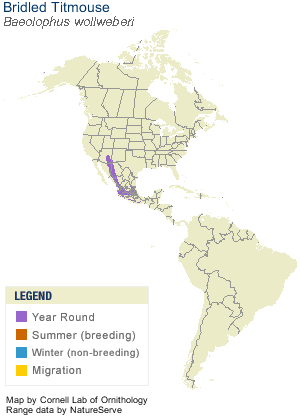
Both of the above have not been recorded in Texas at all.
Only Black-crested, Tufted, and Juniper have been recorded in the state.
The latter is remarkably isolated within the state and the former two hybridize all over their overlap zone. A frustrating topic, to be sure!
So to discuss the ranges of Baeolophus atricristatus (Black-crested), Baeolophus bicolor (Tufted), and Baeolophus ridgwayi (Juniper), let's start with the image below.
The above is a beautiful comparison of North American titmice, their faces and their ranges (though Black-crested does range a bit more NW than they show, making it into the Davis Mountains), via Cornell's Project Feeder Watch page on name changes.
The Guadalupe Mountains of far West Texas does harbor a population of Juniper Titmice (where they are also listed as an irruptive species), but their range in Texas stops there. Period. The rest of Texas is free of Juniper Titmice. Black-crested Titmice do not tend to overlap with Juniper at all, leaving little room for speculation of hybridization. New Mexico birders, unfortunately, must keep dreaming.
This leaves Black-crested Titmice ranging from the mountains in West Texas (but not the Guadalupes - this is why we distrust eBird maps) well into central and South Texas. Frustratingly, there is a large hybrid zone in central Texas along the swath of Tufted Titmouse range. The latter is highly unlikely to end up in West Texas, so they are not our primary focus.
Juniper Titmouse is the contested creature. Thankfully, eBird now has filters for Juniper Titmice in the Trans-Pecos region (but not the Panhandle?), but there are about a dozen reports from Brewster County. None on eBird, interestingly enough, from the Davis Mountains or Jeff Davis county - a gap in what would otherwise bridge the sightings. The reports from Brewster Co., with one exception ("Marathon"), are from Big Bend National Park and mostly in the Chisos. Aside from young Black-crested Titmice in summer that could look a bit confusing, winter reports were perhaps birds that were heard only and not seen? Or enthusiastic individuals who thought the habitat not fit for Black-crested jumped to conclusions? This is all speculation, but apparently so are the reports... and this is a nice summary of why citizen science is what it is. Thankfully the regional editors have changed the Juniper Titmouse status on eBird and any sightings outside of the Guadalupe Mountains will be 'flagged' for review. But until the filters are ironed out, folks hoping to find Juniper Titmice may see what appears to be an isolated year-round population in the Chisos Mountains (via the eBird map) and jump to some interesting conclusions.
From the Texas Bird Breeding Atlas Juniper Titmouse page:
DISTRIBUTION. During the 1987-1992 TBBA field work atlasers found 3 possible and 2 probable breeding records near the Guadalupe Mountains of Trans-Pecos Texas. Nesting was first discovered here in 1973, providing the first breeding record for this state. Reports of this species from other parts of west Texas are probably actually young Black-crested Titmice (B. atricristatus) which acquires its fully black crest as late as its second year after hatching, progressing through gray to dull brown tipped with gray (Oberholser 1974). The species has been reported from the Davis Mountains but breeding has not been documented there (Lockwood and Freeman 2004).
Folks have posted really lovely summaries of why presence/absence 'counting' is slightly ridiculous* and Juniper Titmice are also a good example of that. While we are certainly guilty of listing "X" for a species, even ONE Juniper Titmouse anywhere outside of the Guadalupe Mts is pretty phenomenal. So eBird reports from the park that list "X" or "2" should be scrutinized. Notes, photos and extensive documentation would be appropriate. Ideally, any of the reports would have had some sort of note - heard only, photo'd, or otherwise.
* Fantastic references for counting, via eBird:
Bird Counting 101
Bird Counting 201
Someday we'll have 'compact counting' tips posted as well, but that's more fodder for future posts!
Friday, February 24, 2012
Banded Mexican Jay, Big Bend National Park

(Photo via Mark Flippo of Birding Big Bend)
"A Mexican Jay near the Pinnacles campsites in the Chisos: note the silver band on the bird's left leg. In 1996-97 a graduate student came to BBNP to conduct research on Mexican jays and banded a number of birds, including some hatch year birds. Either he never completed his work or he didn't publish so there is no record of study results but an indirect benefit was the bands provided a datapoint... those few jays still flying aorund in the Chisos with bands on their legs are at least 15 years old. This jay is definitely a viejo..."
Photo and caption originally posted at Birding Big Bend's facebook page, thanks to Kym Flippo!
(Crossposted at I found a banded bird)
Sunday, December 11, 2011
West Texas Christmas Bird Counts
(originally posted 11/29/11, reposted 12/11/11)
From Houston Audubon Society's compilation of statewide Christmas Bird Counts:
The details provided at the bottom are taken directly from the HAS website, but do let me know if there are any errors found! There stands a good chance that we will only be able to attend the Davis Mts,
By date:
Davis Mountains (TXDM) 12/17
Balmorhea (TXBA) 12/18
Comstock (TXCO) 12/26
Del Rio (TXDR) 12/27
Chisos Mountains (TXCM) 12/28
Big Bend NP (East) (TXBG) 12/29
Guadalupe Mountains (TXGM) 12/31
By location:
Balmorhea (TXBA) 12/18
Big Bend NP (East) (TXBG) 12/29
Chisos Mountains (TXCM) 12/28
Comstock (TXCO) 12/26
Davis Mountains (TXDM) 12/17
Del Rio (TXDR) 12/27
Guadalupe Mountains (TXGM) 12/31
Balmorhea: Sunday, December 18, 2011
The Balmorhea CBC traditionally falls on the day following the Davis Mountains. The count circle includes the state park, Phantom Springs, Balmorhea Lake, and wide open spaces around town. The count routinely records 100 species and, as with most rural counts, more observers are always welcome. If possible, please contact Mark Lockwood ahead of time of your interest in participating in the Balmorhea count. Meet at the Balmorhea State Park entry station at 07:30 AM CST. Compiler: Mark Lockwood (Mark.Lockwood@tpwd.state.tx.us).
Big Bend NP (East) - Rio Grande Village: Thursday, December 29, 2011
We will meet in front of the Rio Grande Village Campground Store at 7:15 AM. Birds of note seen during recent counts include: American Bittern, Sora, White-throated Swift, Green Kingfisher, Red-naped Sapsucker, Gray Flycatcher, Dusky Flycatcher, Sage Thrasher, Crissal Thrasher & Green-tailed Towhee. Participants always appreciated and needed. Please contact Bryan Hale at bmhale@swbell.net (email preferred) or phone 512-474-5499 (h) 512-912-4412 (w) 512-426-6033 (cell) for further details. Mark Flippo will also be a contact person out there. He is a ranger at the park and his phone is 432-477-1110.
Chisos Mountains: Wednesday, December 28, 2011
We will meet in the Basin in front of the grocery store at 7:15 AM. Areas will be assigned. Birds of note seen during recent counts include: Golden Eagle, White-throated Swift, Anna's Hummingbird, Red-naped Sapsucker, Plumbeous Vireo, Hutton's Vireo, Mexican Jay, Townsend's Solitaire, Sage Thrasher, Crissal Thrasher & Green-tailed Towhee. Participants always appreciated and needed. Please contact Bryan Hale at bmhale@swbell.net (email preferred) or phone 512-474-5499 (h) 512-912-4412 (w) 512-426-6033 (cell) for further details. Mark Flippo will also be a contact person out there. He is a ranger at the park and his phone is 432-477-1110.
Comstock: Monday, December 26, 2011
Located 45 miles west of Del Rio, the count circle includes parts of the Rio Grande and Pecos Rivers. Meet at the Visitor's Center in Seminole Canyon State Historical Park at 7 AM. Some routes on this count require a lot of walking. Should anyone wish to assist please contact compiler Sue Wiedenfeld at suewie@hctc.net or phone 830-995-2300 to sign up and for further details.
Davis Mountains: Saturday, December 17, 2011
Help with the Davis Mountains Christmas Count is always welcome. Participants will be divided into small groups that will bird the prairies, canyons, and mountains of Jeff Davis County. The count day is followed by a super potluck supper and tallying of the count. Hope to see you all there. Some of the highlights of recent counts were Long-eared Owl, Violet-crowned and Black-chinned Hummingbirds, Montezuma Quail and Grasshopper Sparrow. Compiler: Martha Hansen (birdsinflight@mac.com)
Del Rio: Tuesday, December 27, 2011
Open to all participants. Please preregister. Interested persons can e-mail compiler Karen Gleason at mgleason@stx.rr.com. Please include your phone number in your email. Your participation is appreciated. Within the count circle there is Lake Amistad, Rio Grande River, San Felipe and Spring Creeks, Amistad Recreation Area, Laguna de Plata, and much of Del Rio. We will be meeting at Fisherman's Headquarters at 7 AM on count day.
Guadalupe Mountains: Saturday, December 31, 2011
We are always looking for enough people to cover the count circle. It would be great to have anyone from across the state to come out to far west Texas for the count. This is one of the few places in Texas you can find Steller's Jays. Other birds of note from recent counts include: Golden Eagle, Mountain Chickadee, Juniper Titmouse, Pygmy Nuthatch, Mountain and Western Bluebirds, Townsend's Solitaire, Sage and Crissal Thrasher, Green-tailed Towhee, Sage Sparrow and a variety of Dark-eyed Junco ssp. Please contact the compiler before count day because coverage areas will be assigned before count day. Most areas require hiking. Participants will meet at 6:45 AM at the Pine Springs Cholla Chateau (call 915-828-3251 x2314 for directions) to be sure all areas are covered. Preliminary post-count tally will be at the Cholla at the end of the day. Some housing or RV space may be available for Friday and Saturday nights for $8.00 per person per night. Advance reservations required (phone number above). Contact Michael Haynie (Michael_Haynie@nps.gov) for more information about joining.
From Houston Audubon Society's compilation of statewide Christmas Bird Counts:
The details provided at the bottom are taken directly from the HAS website, but do let me know if there are any errors found! There stands a good chance that we will only be able to attend the Davis Mts,
By date:
Davis Mountains (TXDM) 12/17
Balmorhea (TXBA) 12/18
Comstock (TXCO) 12/26
Del Rio (TXDR) 12/27
Chisos Mountains (TXCM) 12/28
Big Bend NP (East) (TXBG) 12/29
Guadalupe Mountains (TXGM) 12/31
By location:
Balmorhea (TXBA) 12/18
Big Bend NP (East) (TXBG) 12/29
Chisos Mountains (TXCM) 12/28
Comstock (TXCO) 12/26
Davis Mountains (TXDM) 12/17
Del Rio (TXDR) 12/27
Guadalupe Mountains (TXGM) 12/31
Balmorhea: Sunday, December 18, 2011
The Balmorhea CBC traditionally falls on the day following the Davis Mountains. The count circle includes the state park, Phantom Springs, Balmorhea Lake, and wide open spaces around town. The count routinely records 100 species and, as with most rural counts, more observers are always welcome. If possible, please contact Mark Lockwood ahead of time of your interest in participating in the Balmorhea count. Meet at the Balmorhea State Park entry station at 07:30 AM CST. Compiler: Mark Lockwood (Mark.Lockwood@tpwd.state.tx.us).
Big Bend NP (East) - Rio Grande Village: Thursday, December 29, 2011
We will meet in front of the Rio Grande Village Campground Store at 7:15 AM. Birds of note seen during recent counts include: American Bittern, Sora, White-throated Swift, Green Kingfisher, Red-naped Sapsucker, Gray Flycatcher, Dusky Flycatcher, Sage Thrasher, Crissal Thrasher & Green-tailed Towhee. Participants always appreciated and needed. Please contact Bryan Hale at bmhale@swbell.net (email preferred) or phone 512-474-5499 (h) 512-912-4412 (w) 512-426-6033 (cell) for further details. Mark Flippo will also be a contact person out there. He is a ranger at the park and his phone is 432-477-1110.
Chisos Mountains: Wednesday, December 28, 2011
We will meet in the Basin in front of the grocery store at 7:15 AM. Areas will be assigned. Birds of note seen during recent counts include: Golden Eagle, White-throated Swift, Anna's Hummingbird, Red-naped Sapsucker, Plumbeous Vireo, Hutton's Vireo, Mexican Jay, Townsend's Solitaire, Sage Thrasher, Crissal Thrasher & Green-tailed Towhee. Participants always appreciated and needed. Please contact Bryan Hale at bmhale@swbell.net (email preferred) or phone 512-474-5499 (h) 512-912-4412 (w) 512-426-6033 (cell) for further details. Mark Flippo will also be a contact person out there. He is a ranger at the park and his phone is 432-477-1110.
Comstock: Monday, December 26, 2011
Located 45 miles west of Del Rio, the count circle includes parts of the Rio Grande and Pecos Rivers. Meet at the Visitor's Center in Seminole Canyon State Historical Park at 7 AM. Some routes on this count require a lot of walking. Should anyone wish to assist please contact compiler Sue Wiedenfeld at suewie@hctc.net or phone 830-995-2300 to sign up and for further details.
Davis Mountains: Saturday, December 17, 2011
Help with the Davis Mountains Christmas Count is always welcome. Participants will be divided into small groups that will bird the prairies, canyons, and mountains of Jeff Davis County. The count day is followed by a super potluck supper and tallying of the count. Hope to see you all there. Some of the highlights of recent counts were Long-eared Owl, Violet-crowned and Black-chinned Hummingbirds, Montezuma Quail and Grasshopper Sparrow. Compiler: Martha Hansen (birdsinflight@mac.com)
Del Rio: Tuesday, December 27, 2011
Open to all participants. Please preregister. Interested persons can e-mail compiler Karen Gleason at mgleason@stx.rr.com. Please include your phone number in your email. Your participation is appreciated. Within the count circle there is Lake Amistad, Rio Grande River, San Felipe and Spring Creeks, Amistad Recreation Area, Laguna de Plata, and much of Del Rio. We will be meeting at Fisherman's Headquarters at 7 AM on count day.
Guadalupe Mountains: Saturday, December 31, 2011
We are always looking for enough people to cover the count circle. It would be great to have anyone from across the state to come out to far west Texas for the count. This is one of the few places in Texas you can find Steller's Jays. Other birds of note from recent counts include: Golden Eagle, Mountain Chickadee, Juniper Titmouse, Pygmy Nuthatch, Mountain and Western Bluebirds, Townsend's Solitaire, Sage and Crissal Thrasher, Green-tailed Towhee, Sage Sparrow and a variety of Dark-eyed Junco ssp. Please contact the compiler before count day because coverage areas will be assigned before count day. Most areas require hiking. Participants will meet at 6:45 AM at the Pine Springs Cholla Chateau (call 915-828-3251 x2314 for directions) to be sure all areas are covered. Preliminary post-count tally will be at the Cholla at the end of the day. Some housing or RV space may be available for Friday and Saturday nights for $8.00 per person per night. Advance reservations required (phone number above). Contact Michael Haynie (Michael_Haynie@nps.gov) for more information about joining.
Wednesday, April 6, 2011
Chisos Banded-Skipper
This is a slightly belated post from our Wednesday "trial run" of the Colima trail (9 miles round trip of Laguna Meadows trail + Colima Trail + Pinnacles Trail for the return), backdated to reflect the day-of-hike as opposed to Saturday, when I'm finally getting the photos sorted!
Since Matt and I were more focused on getting our ears back in tune with the higher elevations, and getting off the trail before we ran out of snacks and water, we didn't exactly stop to check every butterfly - they all looked like sootywings or duskywings or the little blackish skippers that never land. Indeed, the only one that landed was one that I backtracked for, snapped a few horrid photos of through binoculars, and then managed a decent shot...
This afternoon, flipping through Kaufman's butterfly book, I couldn't place it. It didn't fit any of the duskywings or sooty wings or anything that was pictured with closed wings. So an e-mail to dear friend and lep-enthusiast Nick Block resulted in the official ID:
Chisos Banded-Skipper (Autochton cincta)
The kicker? Check the range map in the link above!

So that little fellow, while unassuming, is arguably one of the 'best' bugs that we've seen to date! Until the ID was made, our most notable sighting of the day had been on our way out of the Chisos Basin, just before the Lost Mine Trail - a black bear with THREE cubs happened to be traipsing along the side of the mountain as we passed. Wonderful to have them back in the region!
Since Matt and I were more focused on getting our ears back in tune with the higher elevations, and getting off the trail before we ran out of snacks and water, we didn't exactly stop to check every butterfly - they all looked like sootywings or duskywings or the little blackish skippers that never land. Indeed, the only one that landed was one that I backtracked for, snapped a few horrid photos of through binoculars, and then managed a decent shot...
This afternoon, flipping through Kaufman's butterfly book, I couldn't place it. It didn't fit any of the duskywings or sooty wings or anything that was pictured with closed wings. So an e-mail to dear friend and lep-enthusiast Nick Block resulted in the official ID:
Chisos Banded-Skipper (Autochton cincta)
The kicker? Check the range map in the link above!

So that little fellow, while unassuming, is arguably one of the 'best' bugs that we've seen to date! Until the ID was made, our most notable sighting of the day had been on our way out of the Chisos Basin, just before the Lost Mine Trail - a black bear with THREE cubs happened to be traipsing along the side of the mountain as we passed. Wonderful to have them back in the region!
Tuesday, December 28, 2010
Big Bend CBC - Chisos Mountains
This entry is backdated to reflect the date of the count; these numbers are via the the Christmas Bird Count web site and the 'current year' results (date of reference 2/18/2011). I've removed number/party hour for the sake of the blog format which already crunches the columns awkwardly.
Chisos Mountains [TXCM]
Texas Region
29.2667°, -103.3°
Christmas Bird Count
Count Year: 111

Pine Canyon (our area for the count)
US = unusual species
GD = good documentation
Species / Number
Scaled Quail (Callipepla squamata) 75
Sharp-shinned Hawk (Accipiter striatus) 1
Cooper's Hawk (Accipiter cooperii) 1
Accipiter sp. (Accipiter) 1
Red-tailed Hawk (Buteo jamaicensis) 6
American Kestrel (Falco sparverius) 2
Peregrine Falcon (Falco peregrinus) 2
White-winged Dove (Zenaida asiatica) 43
Greater Roadrunner (Geococcyx californianus) 4
White-throated Swift (Aeronautes saxatalis) 151
Anna's Hummingbird (Calypte anna) 3
Rufous Hummingbird (Selasphorus rufus) 1
Acorn Woodpecker (Melanerpes formicivorus) 19
Yellow-bellied Sapsucker (Sphyrapicus varius) 3
Red-naped Sapsucker (Sphyrapicus nuchalis) 3
Ladder-backed Woodpecker (Picoides scalaris) 24
Northern Flicker (Colaptes auratus) 3
Northern (Red-shafted) Flicker (Colaptes auratus) 3
Say's Phoebe (Sayornis saya) 15
Western Kingbird (Tyrannus verticalis) 1 US GD
Loggerhead Shrike (Lanius ludovicianus) 6
Hutton's Vireo (Vireo huttoni) 5
Mexican Jay (Aphelocoma ultramarina) 55
Common Raven (Corvus corax) 56
Black-crested Titmouse (Baeolophus atricristatus) 42
Verdin (Auriparus flaviceps) 13
Bushtit (Psaltriparus minimus) 33
Cactus Wren (Campylorhynchus brunneicapillus) 30
Rock Wren (Salpinctes obsoletus) 31
Canyon Wren (Catherpes mexicanus) 22
Bewick's Wren (Thryomanes bewickii) 9
Golden-crowned Kinglet (Regulus satrapa) 4
Ruby-crowned Kinglet (Regulus calendula) 34
Blue-gray Gnatcatcher (Polioptila caerulea) 10
Black-tailed Gnatcatcher (Polioptila melanura) 4
Townsend's Solitaire (Myadestes townsendi) 1
Hermit Thrush (Catharus guttatus) 17
Northern Mockingbird (Mimus polyglottos) 37
Brown Thrasher (Toxostoma rufum) 1
Curve-billed Thrasher (Toxostoma curvirostre) 5
Crissal Thrasher (Toxostoma crissale) 2
Green-tailed Towhee (Pipilo chlorurus) 1
Spotted Towhee (Pipilo maculatus) 47
Canyon Towhee (Melozone fuscus) 54
Cassin's Sparrow (Peucaea cassinii) 2
Rufous-crowned Sparrow (Aimophila ruficeps) 43
Chipping Sparrow (Spizella passerina) 17
Brewer's Sparrow (Spizella breweri) 8
Black-chinned Sparrow (Spizella atrogularis) 2
Lark Bunting (Calamospiza melanocorys) 4
Song Sparrow (Melospiza melodia) 1
Lincoln's Sparrow (Melospiza lincolnii) 1
White-throated Sparrow (Zonotrichia albicollis) 107
White-crowned Sparrow (Zonotrichia leucophrys) 14
sparrow sp. (Emberizinae) 5
Dark-eyed (Gray-headed) Junco (Junco hyemalis) 6
Dark-eyed (Oregon) Junco (Junco hyemalis) 3
Northern Cardinal (Cardinalis cardinalis) 9
Pyrrhuloxia (Cardinalis sinuatus) 34
Eastern Meadowlark (Sturnella magna) 1
House Finch (Carpodacus mexicanus) 33
House Sparrow (Passer domesticus) 45
Weather & Effort
Count Date: Dec 28, 2010
Number of Participants: 18
Number of Party Hours: 55.75
Species Reported: 58
Low Temperature: 36
High Temperature: 66
AM Weather: Clear
Rain: None
Snow: None
PM Weather: Clear
Rain: None
Snow: None
Chisos Mountains [TXCM]
Texas Region
29.2667°, -103.3°
Christmas Bird Count
Count Year: 111

Pine Canyon (our area for the count)
US = unusual species
GD = good documentation
Species / Number
Scaled Quail (Callipepla squamata) 75
Sharp-shinned Hawk (Accipiter striatus) 1
Cooper's Hawk (Accipiter cooperii) 1
Accipiter sp. (Accipiter) 1
Red-tailed Hawk (Buteo jamaicensis) 6
American Kestrel (Falco sparverius) 2
Peregrine Falcon (Falco peregrinus) 2
White-winged Dove (Zenaida asiatica) 43
Greater Roadrunner (Geococcyx californianus) 4
White-throated Swift (Aeronautes saxatalis) 151
Anna's Hummingbird (Calypte anna) 3
Rufous Hummingbird (Selasphorus rufus) 1
Acorn Woodpecker (Melanerpes formicivorus) 19
Yellow-bellied Sapsucker (Sphyrapicus varius) 3
Red-naped Sapsucker (Sphyrapicus nuchalis) 3
Ladder-backed Woodpecker (Picoides scalaris) 24
Northern Flicker (Colaptes auratus) 3
Northern (Red-shafted) Flicker (Colaptes auratus) 3
Say's Phoebe (Sayornis saya) 15
Western Kingbird (Tyrannus verticalis) 1 US GD
Loggerhead Shrike (Lanius ludovicianus) 6
Hutton's Vireo (Vireo huttoni) 5
Mexican Jay (Aphelocoma ultramarina) 55
Common Raven (Corvus corax) 56
Black-crested Titmouse (Baeolophus atricristatus) 42
Verdin (Auriparus flaviceps) 13
Bushtit (Psaltriparus minimus) 33
Cactus Wren (Campylorhynchus brunneicapillus) 30
Rock Wren (Salpinctes obsoletus) 31
Canyon Wren (Catherpes mexicanus) 22
Bewick's Wren (Thryomanes bewickii) 9
Golden-crowned Kinglet (Regulus satrapa) 4
Ruby-crowned Kinglet (Regulus calendula) 34
Blue-gray Gnatcatcher (Polioptila caerulea) 10
Black-tailed Gnatcatcher (Polioptila melanura) 4
Townsend's Solitaire (Myadestes townsendi) 1
Hermit Thrush (Catharus guttatus) 17
Northern Mockingbird (Mimus polyglottos) 37
Brown Thrasher (Toxostoma rufum) 1
Curve-billed Thrasher (Toxostoma curvirostre) 5
Crissal Thrasher (Toxostoma crissale) 2
Green-tailed Towhee (Pipilo chlorurus) 1
Spotted Towhee (Pipilo maculatus) 47
Canyon Towhee (Melozone fuscus) 54
Cassin's Sparrow (Peucaea cassinii) 2
Rufous-crowned Sparrow (Aimophila ruficeps) 43
Chipping Sparrow (Spizella passerina) 17
Brewer's Sparrow (Spizella breweri) 8
Black-chinned Sparrow (Spizella atrogularis) 2
Lark Bunting (Calamospiza melanocorys) 4
Song Sparrow (Melospiza melodia) 1
Lincoln's Sparrow (Melospiza lincolnii) 1
White-throated Sparrow (Zonotrichia albicollis) 107
White-crowned Sparrow (Zonotrichia leucophrys) 14
sparrow sp. (Emberizinae) 5
Dark-eyed (Gray-headed) Junco (Junco hyemalis) 6
Dark-eyed (Oregon) Junco (Junco hyemalis) 3
Northern Cardinal (Cardinalis cardinalis) 9
Pyrrhuloxia (Cardinalis sinuatus) 34
Eastern Meadowlark (Sturnella magna) 1
House Finch (Carpodacus mexicanus) 33
House Sparrow (Passer domesticus) 45
Weather & Effort
Count Date: Dec 28, 2010
Number of Participants: 18
Number of Party Hours: 55.75
Species Reported: 58
Low Temperature: 36
High Temperature: 66
AM Weather: Clear
Rain: None
Snow: None
PM Weather: Clear
Rain: None
Snow: None
Monday, December 27, 2010
Big Bend National Park - late December photos
With permission from Jeff, links to his adventures in Big Bend National Park - this is a great collection of photos and observations typical of December in BBNP. It has definitely reminded me that I need to get more local photos posted!
Big Bend Trip 1
(Introduction, Cook's Slough, the drive west)
Big Bend Trip 2
(Marathon, Post Park, Chisos Basin/Window Trail)
Big Bend Trip 3
(Daniel's Ranch, Rio Grande Village, Dugout Wells, Sam Nail Ranch)
Big Bend Trip 4
(Window Trail, Daniel's Ranch, Rio Grande Village)
Many thanks to Jeff for the permission to share his blog links!
Big Bend Trip 1
(Introduction, Cook's Slough, the drive west)
Big Bend Trip 2
(Marathon, Post Park, Chisos Basin/Window Trail)
Big Bend Trip 3
(Daniel's Ranch, Rio Grande Village, Dugout Wells, Sam Nail Ranch)
Big Bend Trip 4
(Window Trail, Daniel's Ranch, Rio Grande Village)
Many thanks to Jeff for the permission to share his blog links!
Monday, November 15, 2010
Trans-Pecos Christmas Bird Counts
The 'Christmas Bird Count' or CBC is a long tradition (see wiki link here) among birders. Perks? It encourages birding during an under-birded time of year as well as covering areas that aren't always included in casual birding. It's essentially a citizen-based bird census that takes place all over the continent between December 14th and January 5th.
Why not celebrate the New Year in a gorgeous part of the state while contributing to science? CBCs are great for people with all levels of bird interest - there's ample opportunity to learn and just because you can't identify them doesn't mean you can't spot them! Also, note-takers are in high demand (without notes, what data have you got?)
For more CBCs check out Houston Audubon's list of Texas Christmas Bird Counts for 2010-2011
In the Big Bend region, we've got a few to CBCs consider:
Sat. Dec. 18 - Davis Mountains
Sun. Dec. 19 - Balmorhea
Contact for both: Marty Hansen, birdsinflight/at/mac.com
Tues. Dec. 28 - Chisos Basin (Big Bend National Park)
Meet at 7:30 am in the visitor center, reconvene in the evening at the Panther Junction auditorium (around 6:00 PM) to compile the day's counts , pay registration fees, and prepare for the next day count.
Weds. Dec. 29 - Rio Grande Village (Big Bend National Park)
Meet at 7:30 am at the Rio Grande Village store. Meet again at Panther Junction auditorium to compile the list in the evening.
Contact for both BBNP counts: Mark Flippo, Mark_R_Flippo/at/nps.gov
Sat. Jan. 1 - Guadalupe Mountains
It is worth noting the dire situation for the Guadalupe Mountains CBC:
Note on dates:
Counts used to start on the "second Saturday in December" and then it was changed to Dec. 14 regardless of day, causing a lot of conflict in areas that have many counts but not enough birders to go around! So when living on the Upper Texas Coast, I could do nearly 20 counts in one season because of ample weekend counts - when the dates changed and counts started to overlap, I was only able to do maybe eight. With only five counts out here, I sure hope there's good attendance!
Why not celebrate the New Year in a gorgeous part of the state while contributing to science? CBCs are great for people with all levels of bird interest - there's ample opportunity to learn and just because you can't identify them doesn't mean you can't spot them! Also, note-takers are in high demand (without notes, what data have you got?)
For more CBCs check out Houston Audubon's list of Texas Christmas Bird Counts for 2010-2011
In the Big Bend region, we've got a few to CBCs consider:
Sat. Dec. 18 - Davis Mountains
Sun. Dec. 19 - Balmorhea
Contact for both: Marty Hansen, birdsinflight/at/mac.com
Tues. Dec. 28 - Chisos Basin (Big Bend National Park)
Meet at 7:30 am in the visitor center, reconvene in the evening at the Panther Junction auditorium (around 6:00 PM) to compile the day's counts , pay registration fees, and prepare for the next day count.
Weds. Dec. 29 - Rio Grande Village (Big Bend National Park)
Meet at 7:30 am at the Rio Grande Village store. Meet again at Panther Junction auditorium to compile the list in the evening.
Contact for both BBNP counts: Mark Flippo, Mark_R_Flippo/at/nps.gov
Sat. Jan. 1 - Guadalupe Mountains
It is worth noting the dire situation for the Guadalupe Mountains CBC:
Contact: Fred Armstrong, Fred_Armstrong@nps.gov
We have tried to set our count as the last Saturday of the count period every year so that people can routinely make plans. We would welcome the help. Several of our routine participants have died, moved away, aged to the point of not being able to do the hiking, etc., so I have been crying for help over the past couple of years. In the winter some of the park apartments or RV pads are vacant and I can usually offer a place to stay for $8 a person a night so participants can be here at dawn. Stay in touch and let me know if you or others can join us so I can pre-assign coverage areas. Thanks.
Note on dates:
Counts used to start on the "second Saturday in December" and then it was changed to Dec. 14 regardless of day, causing a lot of conflict in areas that have many counts but not enough birders to go around! So when living on the Upper Texas Coast, I could do nearly 20 counts in one season because of ample weekend counts - when the dates changed and counts started to overlap, I was only able to do maybe eight. With only five counts out here, I sure hope there's good attendance!
Subscribe to:
Posts (Atom)